

For everyone carrying love and loss into the holiday season.
Every year, this season brings me back to a specific place -- a canyon I didn’t even know existed until my family fell into it.
After months of estrangement, my brother Carson came back to us right before Thanksgiving 2004. We had no idea we’d only have him for two and a half weeks before he died by suicide. The shock, the questions, the ache of unfinished stories — they swallowed us whole.
The holidays were unbearable that first year. His birthday is Christmas Eve. My very first memory is him coming home from the hospital when I was two and a half. My parents told me he was my Christmas present, and I took that job very seriously.
When he died, people showed up -- Victim Assistance, our faith community, support groups, grief counselors. We were held. But even with all that support, we still slipped into what many survivors know as the canyon of why.
It’s the place where we replay every moment.
Where guilt grows like ivy.
Where silence can feel louder than words.
And it’s a place too many families fall into alone.

Why the ‘Canyon of Why’ Feels So Deep
Research on suicide bereavement and teachings by Dr. Frank Campbell, founder of the LOSS Team movement, show that families often struggle with three invisible forces:
1. The search for meaning: Loved ones try to piece together fragments of someone’s internal world, but much of suicidal despair is private, hidden, or distorted by intense suffering (MDPI, 2018). Meaning-making can take years. Sometimes it never fully resolves.
2. Identity and faith shaken: A traumatic loss can disrupt a person’s sense of self, spirituality, or worldview. Many survivors describe a crisis of belief: What does this mean about us, or the world? How do we trust again?
3. Survivor guilt: Even when we “know better,” the self-blame can feel relentless.
“If only I had seen it sooner.”
“If only I had said the right thing.”
“If only I had been enough.”

The Empty Chair
This time of year, the empty chair at the table takes on a presence of its own. For some, it’s agonizing; for others, it’s sacred; and for many, it’s both at once. Honoring that space by naming the absence, sharing a memory, or lighting a candle becomes an act of love. It allows us to stay connected without pretending the loss isn’t there, holding space for grief and remembrance side by side.
If You’re Navigating the Holidays After Suicide Loss
1. Soften the season’s pressure.
Give yourself permission to do less. Traditions can change. Energy can fluctuate. You’re not failing if you can’t show up the way you used to.
2. Stay connected in ways that feel safe.
Let trusted people know what helps and what doesn’t. Share a story, light a candle, play a song, take a walk. Small acts of remembrance ease isolation and honor your person without overwhelming you.
3. Reach out when the grief gets heavy.
If you feel yourself slipping deeper into the canyon, don’t go alone. Turn to friends, faith leaders, peer supporters, or grief counselors. Connection is protective, and you deserve support during the hardest moments.
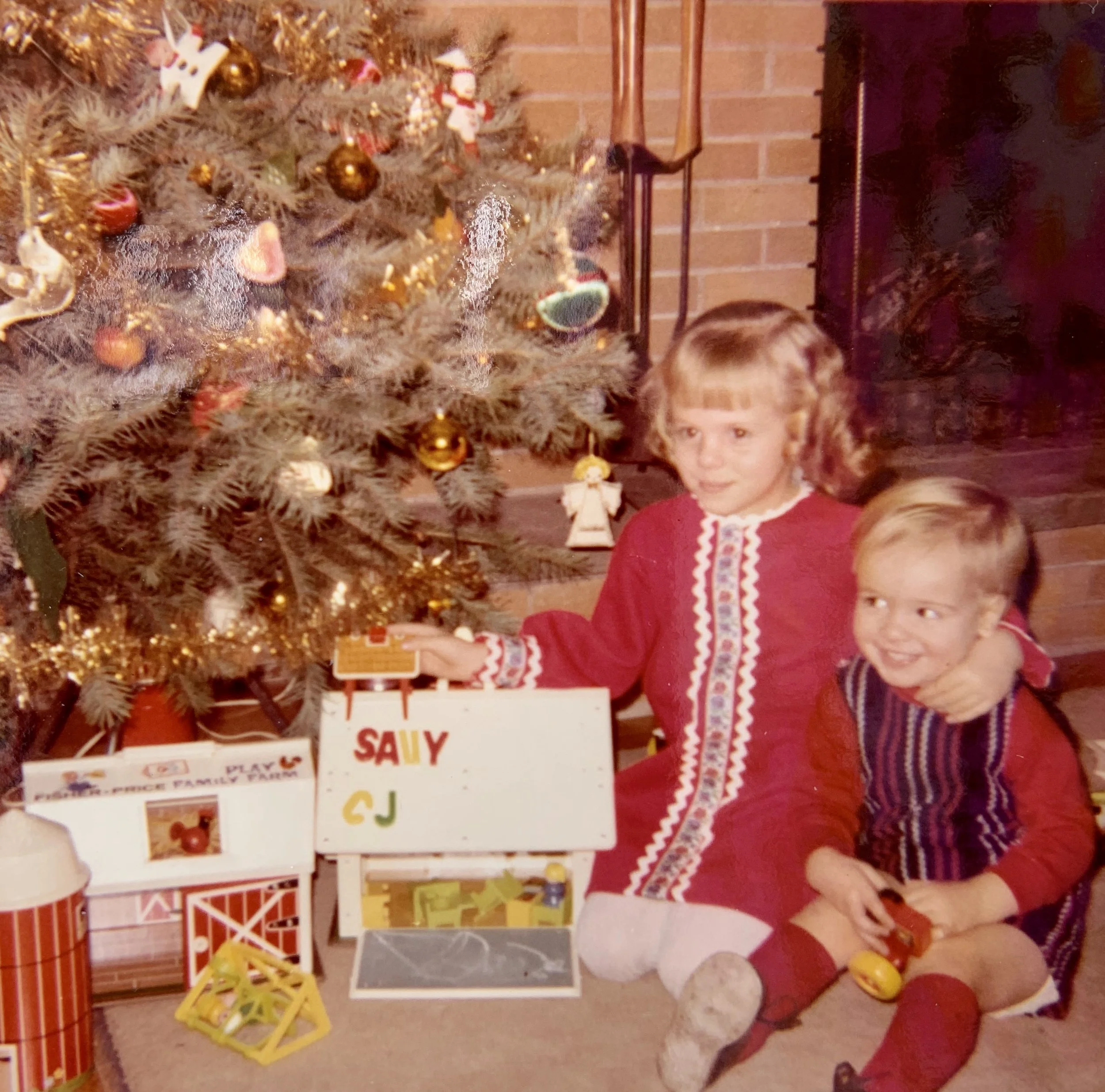
Sending peace, gentleness, and connection as we move through the holidays together.
Warmly,
Sally
Resources for Suicide Loss Survivors
Alliance of Hope
Offers peer support forums and resources specifically for suicide loss survivors.
American Foundation for Suicide Prevention – Healing Conversations
https://afsp.org/healing-conversations/
A structured program connecting survivors of suicide loss with trained volunteer listeners who have lived experience, for one-on-one support and connection.
American Foundation for Suicide Prevention – Find a Support Group
https://afsp.org/find-a-support-group/
Directory of local, online, and regional support groups for people impacted by suicide loss, grief, and healing.
References
Campbell, F. R. (1997). Changing the legacy of suicide. Suicide and Life-Threatening Behavior, 27(4), 329–338. https://doi.org/10.1111/j.1943-278X.1997.tb00512.x
Campbell, F. R. (2001). The influence of an active postvention on the length of time elapsed before survivors of suicide seek treatment (Doctoral dissertation, Louisiana State University). LSU Digital Commons. https://doi.org/10.31390/gradschool_disstheses.397
Campbell, F. R., Cataldie, L., McIntosh, J., & Millet, K. (2004). An active postvention program. Crisis: The Journal of Crisis Intervention and Suicide Prevention, 25(1), 30–32. https://doi.org/10.1027/0227-5910.25.1.30
Cerel, J., & Campbell, F. R. (2008). Suicide survivors seeking mental health services: A preliminary examination of the role of an active postvention model. Suicide and Life-Threatening Behavior, 38(1), 30–34. https://doi.org/10.1521/suli.2008.38.1.30
Froese, J. E., McDermott, L., & Iwasaki, Y. (2019). The other side of suicide loss: The potential role of leisure and meaning-making for suicide survivors. Annals of Leisure Research, 23(3), 322-338. https://doi.org/10.1080/11745398.2019.1616572 Semantic Scholartandfonline.com
Wittenrich, L. (2025, January 14). The heavy burden of suicide survivor’s guilt: Understanding, coping and moving forward. Behavioral Health News. https://behavioralhealthnews.org/the-heavy-burden-of-suicide-survivors-guilt-understanding-coping-and-moving-forward/