

Hey everyone,
You know, for someone who talks a lot about mental health and wellbeing, I've been a little quiet about one of the most fundamental things affecting us all: sleep. And honestly? It's probably because I'm often wrestling with it myself! Between the whirl of job stress, the... ahem... joys of menopause, and those delightful travel time zones, a good night's sleep can sometimes feel like finding a unicorn. So, if you're struggling, believe me, you're not alone.
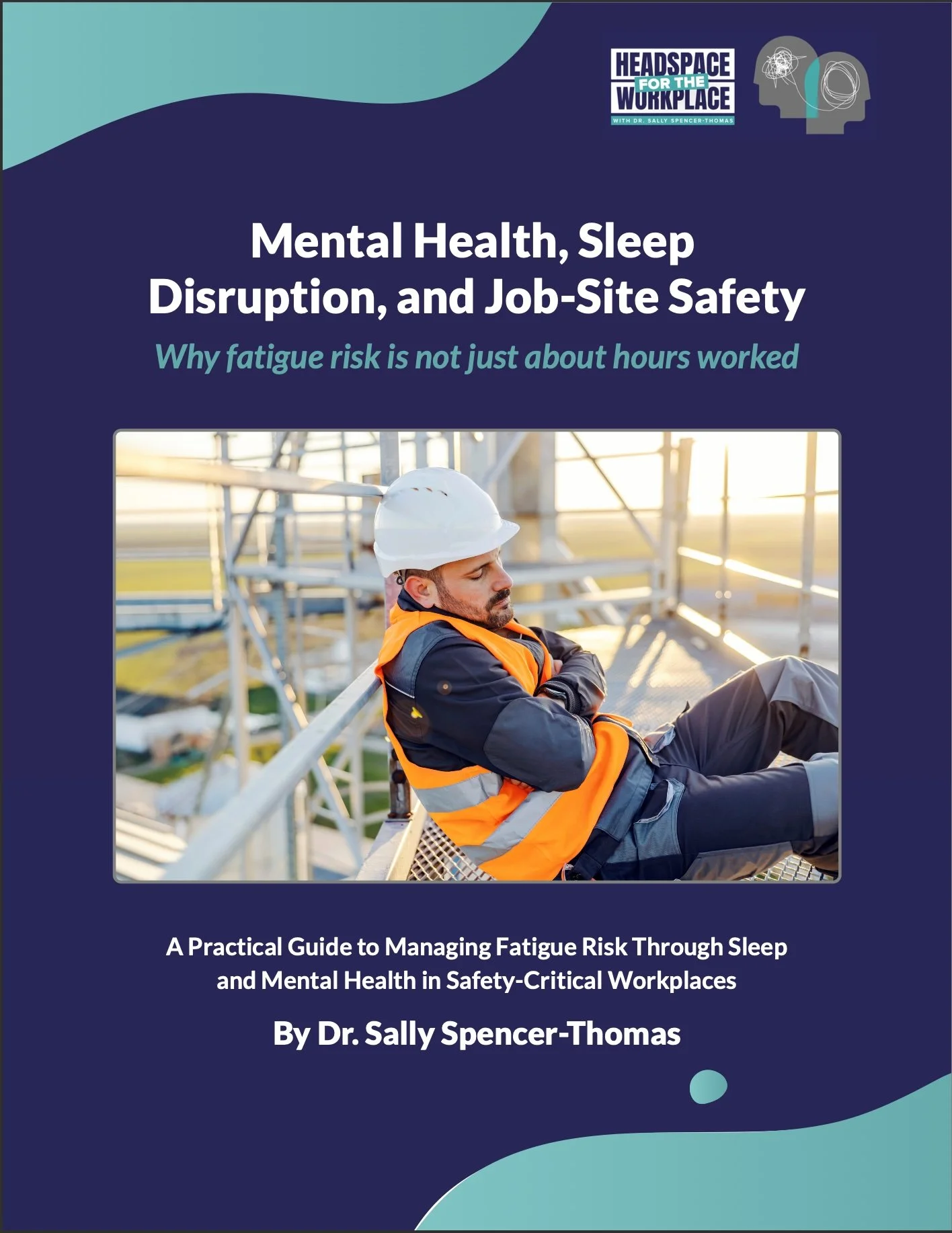
This free guide that might just change how you think about risk, recovery, and your 3am wake-ups.
While we might shrug off a bad night as "just part of life," the truth is, sleep disruption isn't just about feeling tired. It's often the canary in the coal mine, an early, invisible warning sign that something deeper is off, especially when it comes to workplace safety and mental wellbeing.
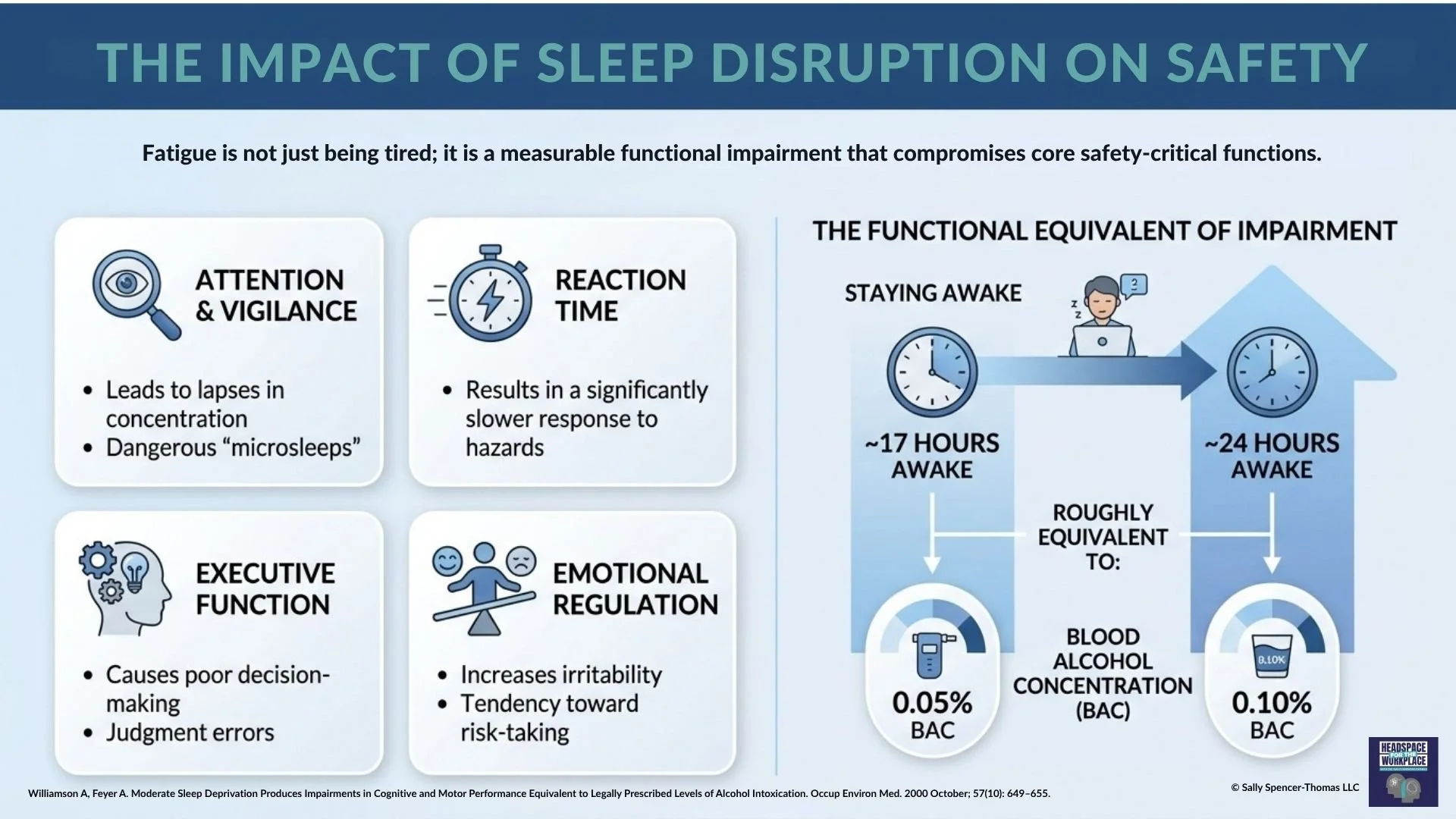
Here's the sobering truth: 17 hours awake produces cognitive and motor impairment similar to alcohol intoxication at a BAC level of .05%.
24 hours awake is equivalent impairment as having a BAC of .10% à that's legally drunk and then some.
We tend to focus on what we can see: equipment, environment, behavior. But what if one of the strongest predictors of safety risks is happening when no one's looking? What if it's happening at night?
Here's what the data is screaming (and it's not a lullaby):
Workers with sleep problems face a 60-62% higher risk of workplace injury. Yikes.
An estimated 1 in 8 injuries (13%) are directly linked to sleep issues.
Less than 5 hours of sleep? That's a 2.65x higher injury risk.
Even if you get "enough" hours, poor quality sleep still means a 2.57x higher risk.
These aren't minor stats. They tell a story of a systemic problem, where fatigue isn't just about how long you've been awake, but how well you're recovering.
And guess what's often lurking behind sleep troubles? Mental health.
Sleep and mental health are two sides of the same very important coin.
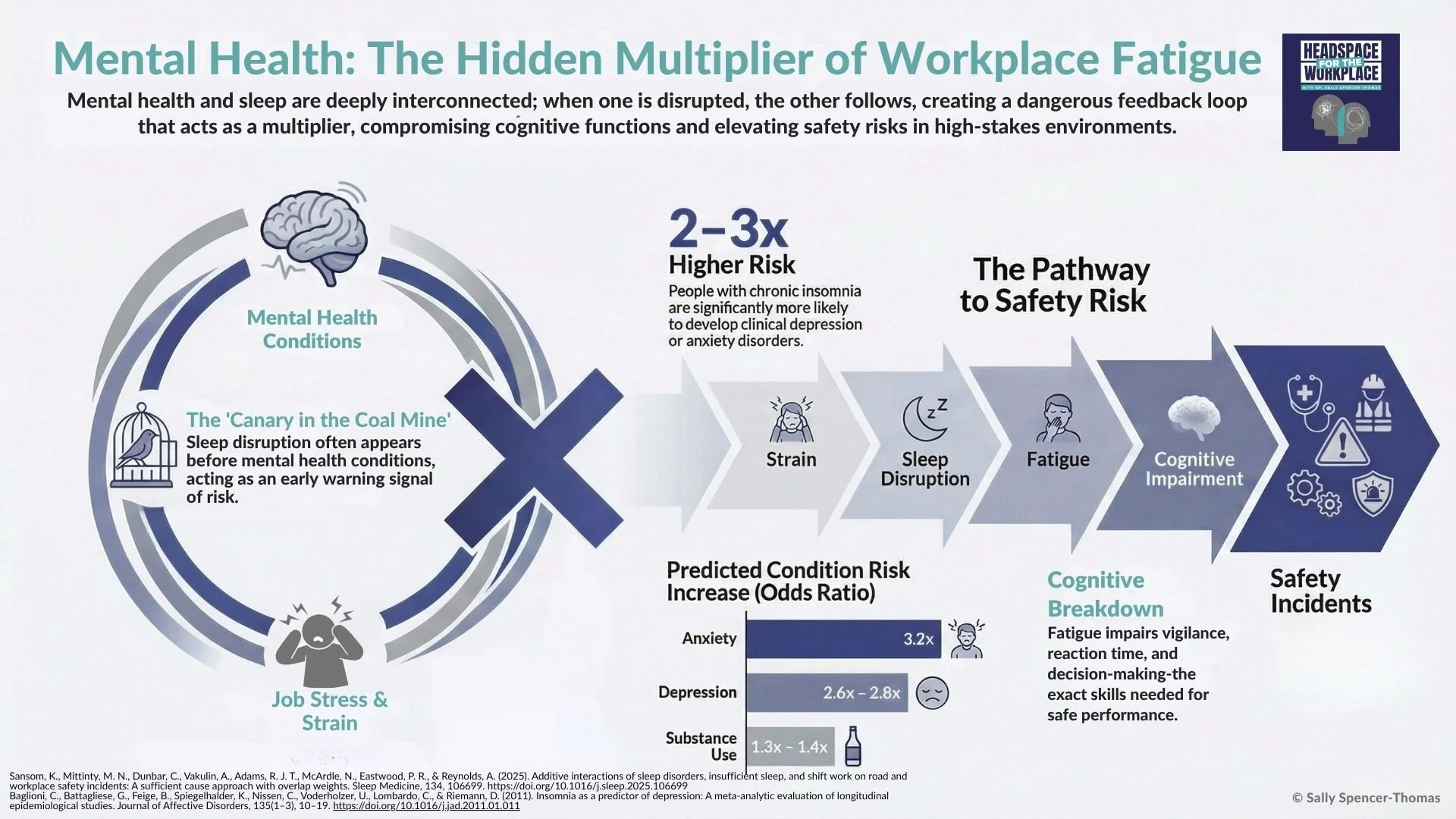
Chronic insomnia can double or triple your risk of depression and anxiety.
Job stress doesn't magically disappear at 5 PM; it often creeps into our nights, wrecking our rest.
Often, sleep problems show up before mental health conditions fully emerge. It's an early alarm.
This is why understanding sleep is so critical. It's the first visible signal that things might be unraveling, long before errors, incidents, or full-blown burnout hit.
The Sneaky Pathway to Risk:
Stress doesn't stay neatly contained. It starts a chain reaction:
Job strain → Sleep disruption → Fatigue → Cognitive impairment → Safety incidents.
And the very functions sleep deprivation messes with? They're the exact ones we need to stay safe: attention, reaction time, decision-making, emotional regulation. At its worst, fatigue can impair performance as much as alcohol intoxication. It's a serious functional safety risk.
It's Not Just About Hours! The Hidden Architecture of Fatigue Risk:
Fatigue isn't just about the clock. It's about three key pillars:
Quantity: How many hours you actually sleep.
Quality: How restorative that sleep actually is.
Timing: Whether your sleep aligns with your natural biological rhythms.
Two people can work the same shift, but show up with wildly different levels of impairment because of these factors. Focusing only on "hours worked" misses the big picture entirely.
The Good News: We Can Fix This!
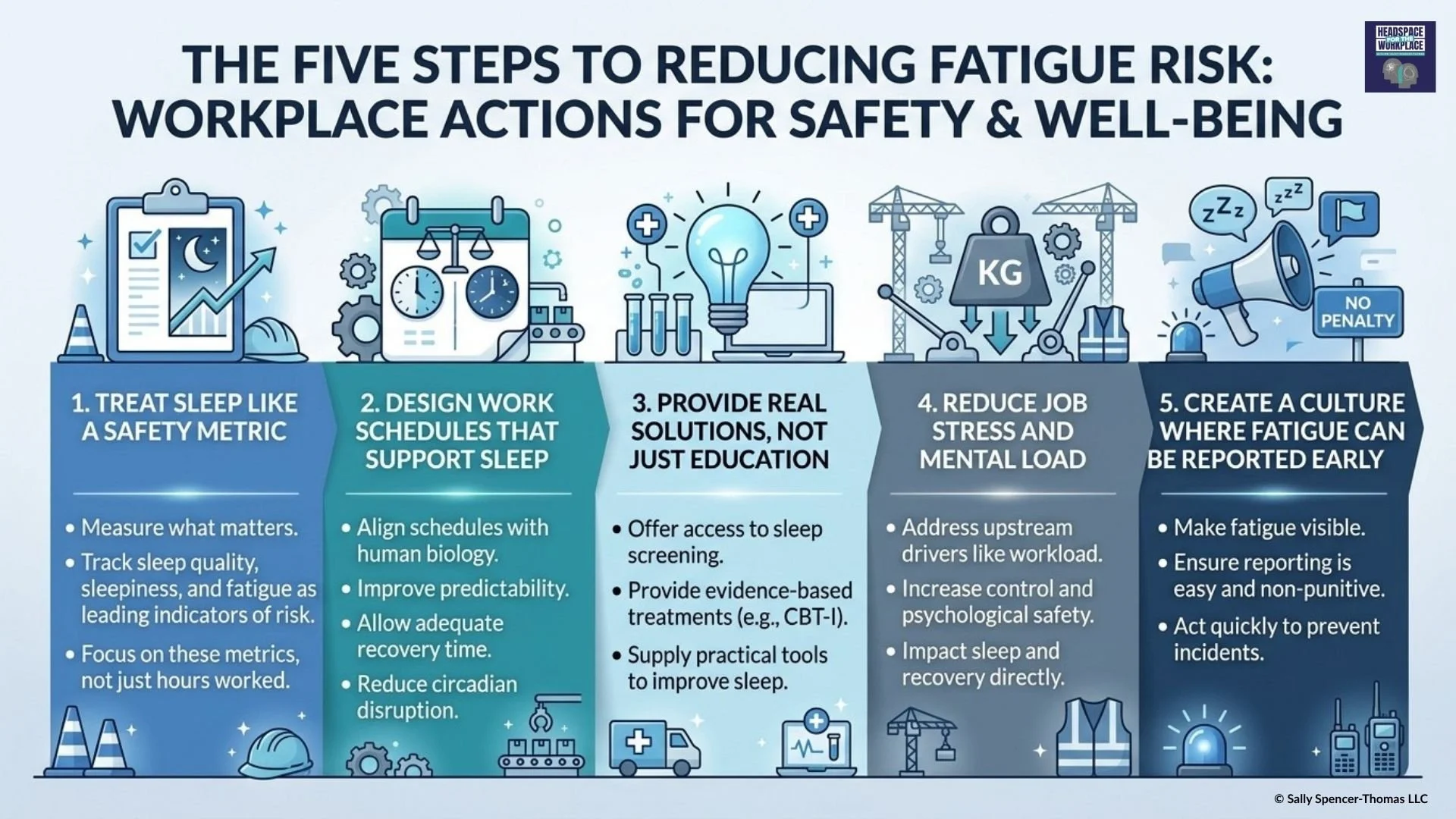
Sleep is a modifiable risk! My new guide outlines five practical actions workplaces (and we as individuals!) can take:
Treat sleep like a safety metric: Track quality and fatigue as leading indicators.
Design schedules for recovery: Predictability and biological alignment matter.
Provide real solutions: Offer access to screening, treatment, and practical tools.
Reduce job stress and mental load: Work follows us home; let's lighten the burden.
Make fatigue safe to report early: Non-punitive systems prevent incidents.
When sleep improves, safety improves. But this only happens when entire systems – not just individuals – change.
Ready to dive deeper? I've got new resources for you!
"Mental Health, Sleep Disruption, and Job-Site Safety:
A practical guide to managing fatigue risk through sleep and mental health"
Listen to the Podcast:
I'm also launching a new podcast episode that unpacks all of this!
”The Hidden Safety Crisis: Sleep, Mental Health, and Workplace Fatigue”
A Final Thought:
There are so many crucial conversations happening in workplace mental health right now. Sleep offers something unique: a simple, measurable, and early signal that connects them all.
When sleep is off, something is off.
When sleep improves, a lot of other things tend to follow.
That makes it a pretty good place to start, don't you think?
To your well-rested, safer self,
Sally