

We are living in a moment that is calling for a deeper language around human suffering, and I believe my friend Sarah Gaer has given us exactly that.
This is the story of a friendship, an idea whose time has come, and the years it took to bring it into the world.
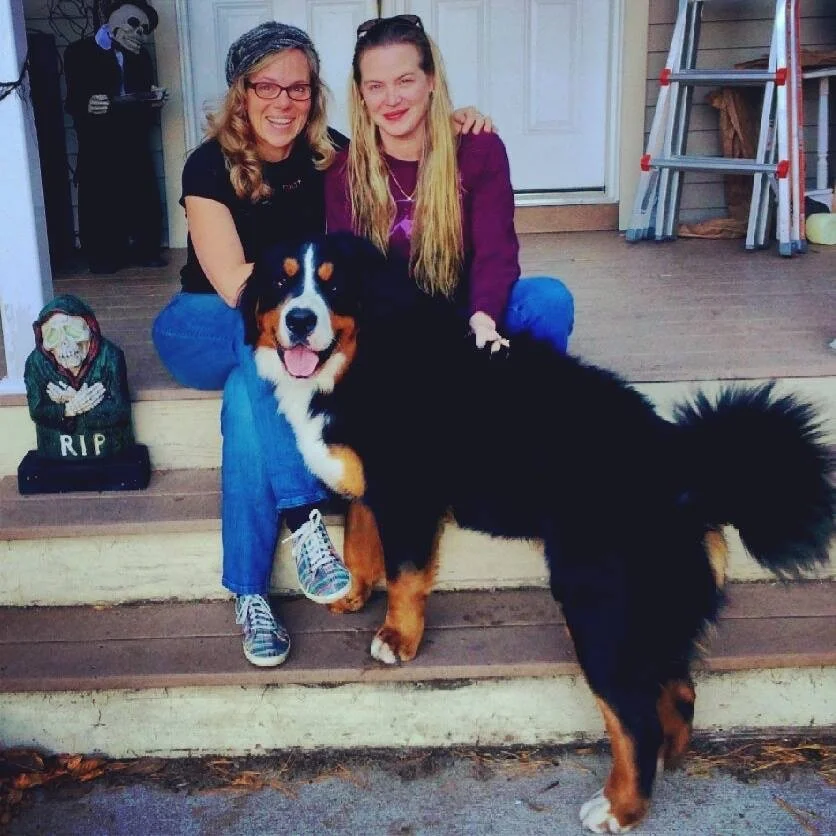
Sally & Sarah 2016 - Friendship is Soul Care
2019 -- A Mindset-Shifting Conversation and The Question That Started It All
Many years ago, a life-changing ah-ha moment happened for me.
Not in a research paper.
Not in a conference room.
Not in a lecture hall or a clinical training.
But in a conversation with my friend, Sarah Gaer.
Sarah had been thinking deeply about something that had been nagging at her for years.
We were talking about suicide prevention -- the frameworks we use, the interventions we deploy, the way we've built an entire field around restriction, risk assessments, neurobiology and cognitive patterns.
And then she asked me something that stopped me cold:
"What if people experiencing suicidal intensity are actually experiencing soul exhaustion?"
I remember the silence after she said it.
Not an uncomfortable silence. A recognition silence. I remember thinking… yes, this is it. This is what so many people are trying to describe but don't quite have the language for.
"You are on to something here"
I said it out loud.
And I meant it completely.
Because I realized, in that moment, that our medical model, as important and necessary as it is, was telling only part of the story.
Yes, we need to understand brain chemistry. Yes, cognitive distortions matter. Yes, medication can save lives.
But.
There was something else.
Something deeper.
Back in 2019, Sarah wrote a guest blog on my site introducing this soul exhaustion concept to the world…
April 2020 – “The Essence of Who We Are is Tired”
Then came April 2020.
The world had cracked open almost overnight. I remember the specific, surreal whiplash of it…watching 30+ speaking engagements vanish from my calendar in the span of two weeks. A year's worth of income. Gone. As someone supporting a family of five, the financial anxiety was immediate and visceral.
And like so many families, we scrambled. We whisked our teenage and young adult sons up to our mountain cabin, trading the familiar rhythm of school, routines, and community for something none of us had words for yet. Our elder parents were vulnerable and far away. The kids were unmoored. Everything that had structured our lives — purpose, connection, momentum — had been abruptly unplugged.
It was disorienting in a way that went beyond stress. This wasn't just hard. It felt like the ground itself had shifted beneath us.
And yet, there was this one grace.
My bestie Sarah and I found each other on Zoom. Two women who had spent years working in the suicide prevention space, suddenly sitting in the same collective fog as everyone else, talking honestly about how our bones were tired. Not just our bodies. Not just our schedules. Something deeper.
That conversation became a podcast episode.

And in that conversation, we found ourselves circling something that neither stress nor burnout quite captured.
We said it out loud that day:
"It feels like the essence of who we are is tired."
That line has stayed with me ever since.
Because it named something the traditional mental health frameworks often miss. Not just symptoms. Not just diagnoses. But a kind of deep, existential depletion — the kind that settles into your soul when the life you knew has been hollowed out and you're not sure what's left.
2022 -- Testing the Idea on the World Stage
Fast forward to Copenhagen.
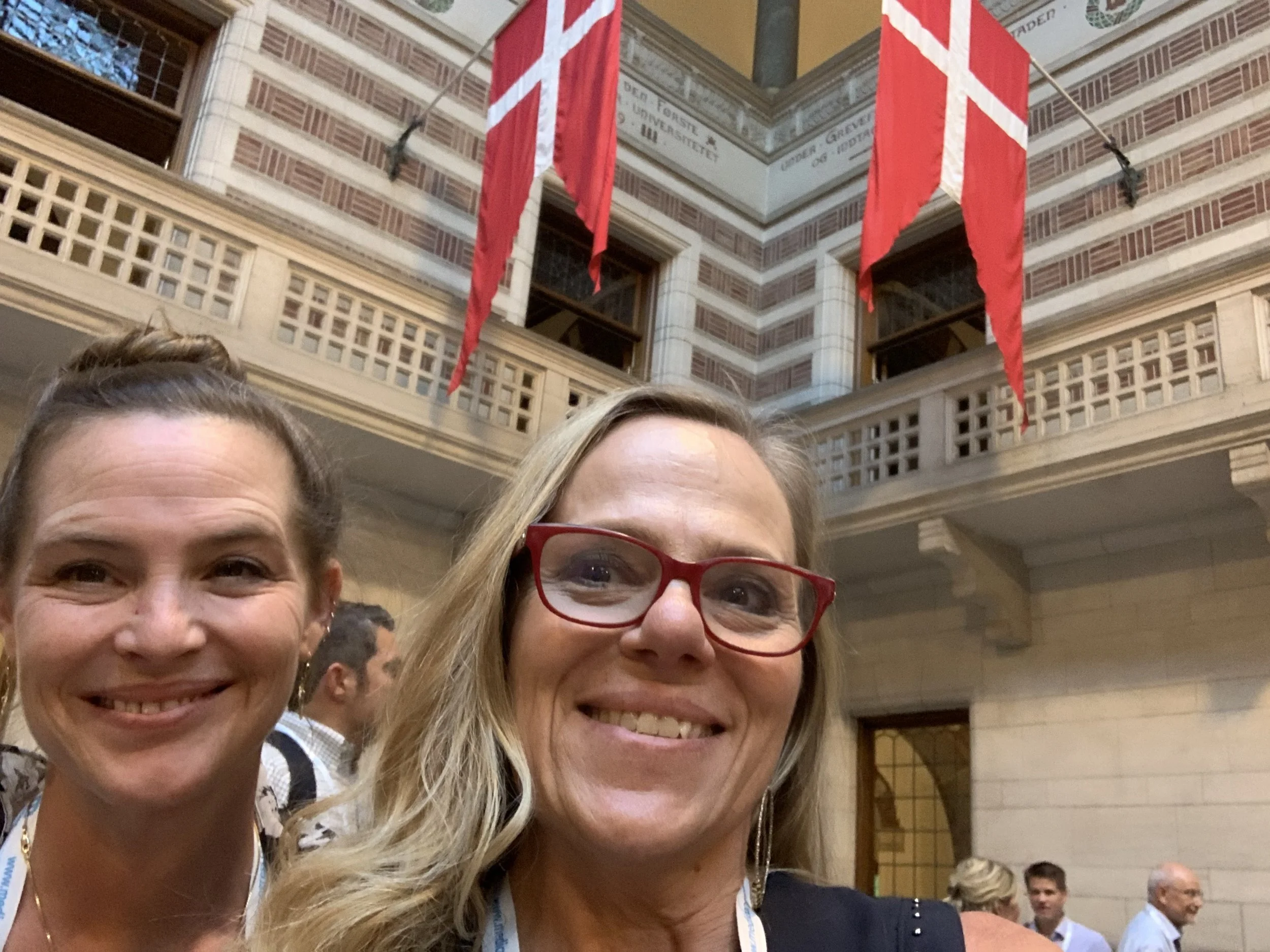
At the European Symposium on Suicide and Suicidal Behavior, I watched Sarah do what she does best…get curious and go straight to the heart of things.
She interviewed suicidologists from all over the world, asking two deceptively simple questions:
What is the soul?
What is soul exhaustion?
Different cultures. Different disciplines. Same answers.
From around the globe, they said:
"The deepest part of who you are."
"The essence of yourself."
And when it came to what exhaustion means:
"The inability to carry any more emotional weight."
"Loss of self-respect and will to carry on."
"The inability of the soul to connect to love."
That was an "ah-ha" moment.
Because across all that diversity, the human experience was strikingly similar. This wasn't just a poetic idea. It was a shared reality and honestly, the language of suicidal despair.
Why The Idea of Soul Exhaustion and Soul Care Changes Everything
For too long, we've leaned heavily on a medical model to understand distress and suicidal despair.
And yes, biology matters.
But it's not the whole story.
Because when someone says:
"I'm done."
"I don't feel like myself."
"I can't keep carrying this."
They're not just describing symptoms.
They're describing soul exhaustion.
And here's the shift that changes everything:
Instead of asking "What's wrong with you?" we begin asking "What has your soul been carrying?"
Instead of fixing… we start tending.
Like a wilted plant, we don't blame it…we look at the conditions around it. Soul care is that reframe.
The Soul Care Movement Built with Real People
Over the past three years, I've watched Sarah stay deeply committed to this idea; not as a solo endeavor, but as a collaborative movement.
She and her team -- all people with lived and living experience -- have shaped this work together.
They've named what soul exhaustion feels like. They've identified the root causes. They've built practical tools for appraisals, healing, and reconnection.
This work is centered on real human stories.
You can explore more here: https://www.soulexhaustion.care/
And Now… It's Here
I am so excited to celebrate this moment:
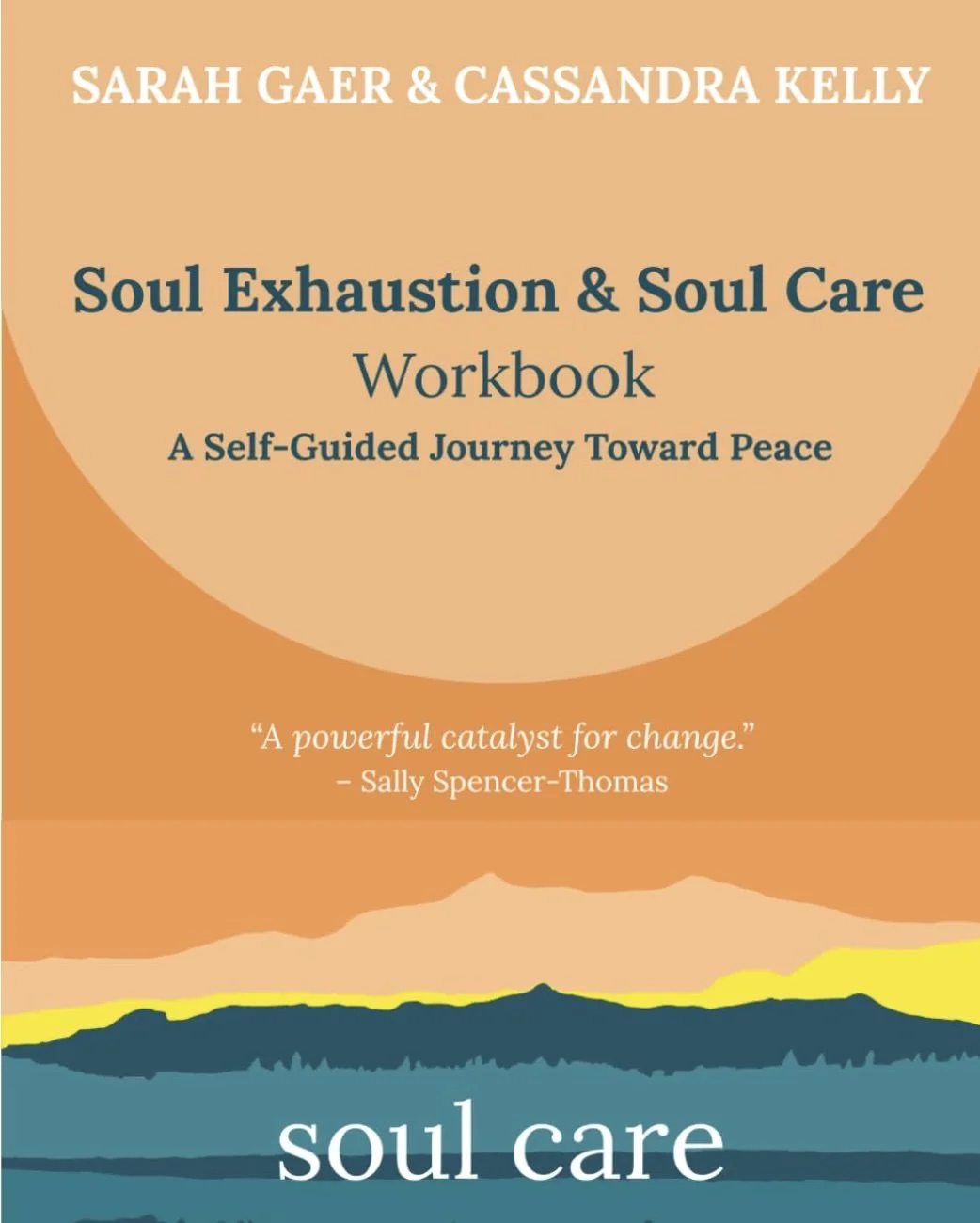
The launch of the Soul Exhaustion & Soul Care Workbook for Self-Discovery by Sarah Gaer and Cassie Kelly.
This workbook is the culmination of years of listening, learning, and co-creating.
It offers a compassionate framework for understanding how life experiences impact the deepest part of who we are.
What's Inside:
Reflections like: "What has been draining your sense of self?"
Explorations of emotional, relational, and existential fatigue
Practical tools to help you reconnect with meaning, identity, and hope
One reviewer beautifully captured it:
"Sarah offers a powerful reframe: instead of asking 'What's wrong with me?' she helps you ask 'What do I need to feel alive again?' The tools are practical, reflective, and deeply human."
Who This Is For
Anyone who feels depleted by life. Therapists looking for deeper, more human-centered tools. Leaders who want to support real wellbeing, not just surface fixes.
If this resonates, I highly encourage you to grab a copy now while the launch week price is available.
Tending the Fire Within
If your fire within – that spark of who you are -- feels low right now, not just physically tired, but soul tired, this work offers a different kind of hope.
Not "push through."
Not "fix yourself."
But: Pause. Notice. Tend.
Because your fire isn't gone. It just needs care.
I'm so proud to be walking alongside Sarah as her wing woman and to see how her work ignites connection and healing in so many.
With gratitude,
Sally