

In this episode of Headspace for the Workplace, I sit down with Alicia Scovill, President of Scovill Construction & Contracting Services, a veteran herself, and a construction workplace mental health expert. We open with a sobering reality: veterans in the United States die by suicide at rates higher than the general population, and most are working at the time of their death, or have immediate family members who are working. That makes the workplace one of the most cross-cutting systems available for veteran suicide prevention, and yet most organizations have no real strategy beyond hiring veterans and calling it a day.
Alicia and I connected through the Construction Mental Health and Wellbeing Summit, where we co-chaired a leadership roundtable on construction mental health. In this episode, Alicia brings a unique combination of perspectives to the table: her own military background, her experience building and running a construction business, and the firsthand vantage point of having seen, from inside multiple organizations, the well-intentioned ways companies unintentionally cause harm to their veteran employees.
The core argument of the episode is that veteran mental health at work is rarely about trauma or transition in the way most people assume. More often, it is about systems failures: unclear accountability, mismatched authority and responsibility, inconsistent communication, and the absence of the structure that helped many veterans survive and thrive in the military. Alicia and I walk through concrete examples, including a construction-specific scenario involving an estimator and a project manager, to illustrate exactly how these systems gaps create burnout and isolation for veteran employees, even when those employees appear to be high performers on the surface.
Why This Matters in the Workplace
The Workplace Is a Cross-Cutting System for Veteran Suicide Prevention
Most suicide prevention efforts targeting veterans focus on clinical care, VA services, or crisis response. But the workplace is where most veterans spend the majority of their waking hours, and it is where the patterns that lead to burnout, isolation, and crisis often take root long before anyone notices. Organizations that want to play a meaningful role in veteran suicide prevention have to start by examining their own systems, not just their hiring practices or their messaging.
Why High Performance Can Mask the Highest Risk
• Some of the highest-performing veteran employees are also at the greatest risk for mental health struggles, because high performance can be a survival strategy rather than a sign of thriving
• Veterans navigating the assimilation into corporate culture often feel pressure to prove themselves by working more hours and taking on more responsibility, especially if they perceive themselves as starting behind civilian peers
• When that extra effort isn't matched by clear accountability structures or active leadership guidance, the result is burnout, often without the individual understanding why they feel the way they do
• High performance can also be a way of running from unresolved struggles rather than confronting them, a pattern Alicia notes shows up equally in veteran men and women
Systems Failures Hiding in Plain Sight
• Communication and authority mismatches: when someone is given responsibility without the authority to actually carry it out, the result is internal friction and overwhelm, often without a clear explanation
• Unclear roles and responsibilities: a common trap for veterans, who are wired to step into leadership vacuums; when nobody is leading, many veterans will, and depending on the environment, that instinct can be read in very different ways, not all of them positive
• Lack of predictability and consistency: military structure runs on Standard Operating Procedures, or SOPs; their absence in civilian workplaces leaves veterans without the scaffolding that previously gave them a sense of control and safety
• Isolation hiding behind high function: a veteran can appear highly functional on the outside while isolation quietly grows underneath, disconnecting them from the sense of belonging, purpose, and identity that systems and community once provided
Why Slogans Fail and Systems Succeed
Alicia is direct about this: telling veterans a workplace is veteran-friendly because the organization is willing to hire veterans is, in her words, one of the most unfriendly things an organization can do. It signals box-checking rather than genuine investment. Real veteran-friendly workplaces build the infrastructure that veterans have relied on throughout their careers: clear accountability in both directions (who is accountable to whom), predictable communication flows, defined roles and responsibilities, and structure that does not have to be rigid or perfect, but does have to exist.
In this episode, we’ll answer:
Why do veterans die by suicide at higher rates, and what role does the workplace play?
What does it actually mean to be a veteran-friendly workplace?
Why are high-performing veterans sometimes at the greatest mental health risk?
How do Standard Operating Procedures (SOPs) help support veteran employees at work?
Why do veterans step into leadership roles even when it isn't their job?
Two Tactical Takeaways from This Episode
Tactical Takeaway #1: Visible Performance Is Not the Same as Workforce Wellbeing
Alicia's first takeaway challenges a default assumption many leaders make: if someone is performing well, they must be doing fine. For veterans in particular, this assumption can be dangerously wrong. High performance can be a survival strategy, a way of proving oneself in an unfamiliar corporate environment, or a way of outrunning something the individual hasn't yet processed. Without active leadership engagement and clear systems of accountability, that performance can mask a person who is quietly running out of capacity.
WHY IT WORKS
This reframe gives leaders a critical diagnostic question to ask themselves: are we mistaking output for wellbeing? Alicia's construction example makes the mechanism concrete. An estimator and project manager build an estimate that includes the full project team needed to deliver the work. A senior project manager, eager to win the job, cuts the estimate down and removes team members before submitting it. The result: the estimator's numbers are no longer accurate, and the project manager is left without the team required to do the job. The person holding the responsibility has no matching authority to fix it, and the predictable result is burnout, scramble, and disengagement, often without anyone naming the system failure that caused it.
Tactical Takeaway #2: Veteran-Friendly Workplaces Require Systems More Than Slogans
Alicia's second takeaway is a direct challenge to the language many organizations use without the substance behind it. Hiring veterans is not the same as supporting them. Real veteran-friendliness requires building the systems veterans relied on in the military: clear accountability in both directions, predictable communication, defined roles and responsibilities, and some version of structure, even an imperfect one, that everyone on the team understands and can rely on.
Alicia draws a direct comparison to military Standard Operating Procedures, or SOPs: documents that draw a line in the sand so that when a step is missed or a role goes unfilled, the gap is visible and addressable rather than invisible until it becomes a crisis. I connect this directly to my own work streamlining postvention response protocols for the construction industry, where lengthy, document-heavy plans had to be cut down to something usable in the moment of activation, much like an SOP.
WHY IT WORKS
Systems work because they create predictability, and predictability is what allows people, especially those trained in high-stakes, structured environments, to know where they stand. That sense of standing is directly connected to a sense of connection and belonging. Without it, isolation can grow quietly behind a highly functional exterior, disconnecting a person from the perspective, identity, and purpose that meaningful systems and relationships provide. Slogans cannot create that sense of standing. Systems can.
about alicia scovill
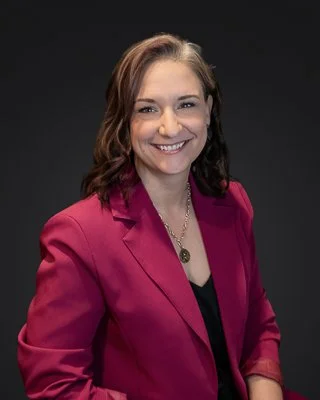
Alicia Scovill is the President of Scovill Construction & Contracting Services and a workforce systems strategist focused on the hidden organizational dynamics that can quietly push high-performing people toward exhaustion, hopelessness, and burnout long before leadership realizes there is a problem. Drawing from experience in construction leadership, veteran workforce advocacy, and lived experience inside high-pressure industries, Alicia challenges organizations to look beyond surface-level culture messaging and ask whether people are truly thriving inside the environments they are expected to perform within every day. Her work helps leaders recognize the difference between visible performance and genuine workforce wellbeing… and why healthier systems ultimately create stronger organizations. Alicia drives a right-hand-drive diesel Land Cruiser, which gets even more attention when her very handsome service dog, Admiral, is riding along as copilot.