

Special Episode of Headspace for the Workplace — Relaunched from the International Association for Suicide Prevention (IASP) Work-Related Suicide Series
Overview
Fly-In Fly-Out (FIFO) work can quietly erode mental health, strain families, and elevate suicide risk if workplaces aren’t designed with human realities in mind.
In this special episode of Headspace for the Workplace, we relaunch a powerful conversation from the IASP Work-Related Suicide Series featuring Francisco “Fran” Valenzuela, CRSP, a safety leader, lived-experience advocate, and systems-level change agent in the oil and gas sector.
Fran shares how FIFO environments create a high-risk ecosystem shaped by isolation, long rotations, masculine norms, fatigue, and limited access to care,Safety Fra and how those same systems can be redesigned to protect lives, strengthen culture, and improve the bottom line.
Why Fly-In Fly-Out (FIFO) Work Matters for Suicide Prevention
FIFO workers often operate in conditions that amplify known risk factors for suicide and mental distress:
Extended time away from family and community
Long shifts, long commutes, and chronic fatigue
Relationship strain and parenting stress
Masculine “tough it out” cultures
Alcohol and substance-based coping norms
Limited or mistrusted mental health access
Stigma around help-seeking
Psychological distance from leadership and home
Fran’s story — and the data — make one thing clear: suicide prevention must meet FIFO workers where they are, culturally and geographically.
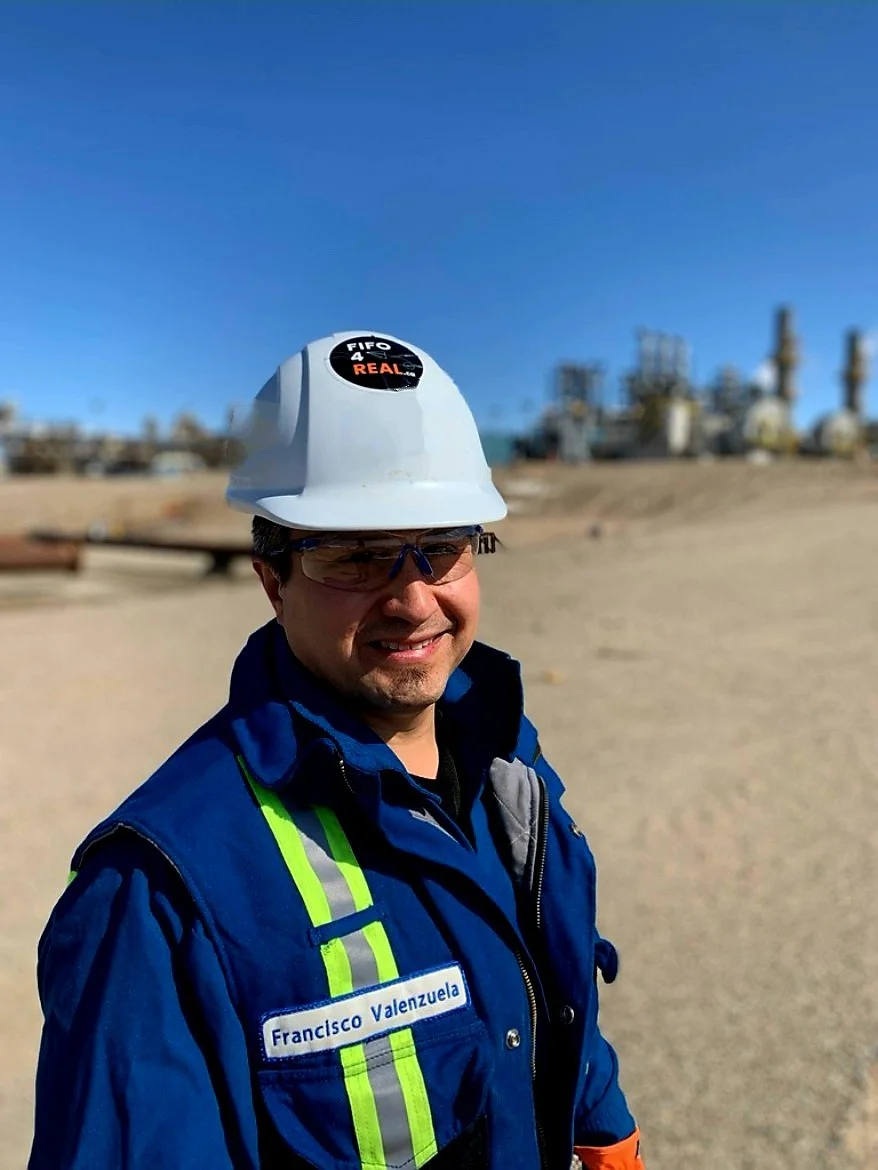
About “Safety Fran” & FIFO4Real
Francisco “Safety Fran” Valenzuela, CRSP, is a Canadian safety professional, lived-experience advocate, and systems-level change agent working at the intersection of workplace safety, mental health, and suicide prevention in Fly-In Fly-Out (FIFO) environments.
In Canada’s oil sands alone, nearly 27,000 FIFO workers live in remote camps, drawn by above-average wages, adventure, and extended time off. But behind the financial rewards lies a hidden toll: elevated rates of stress, anxiety, depression, relationship breakdown, and suicide. As one industry veteran put it bluntly, “You ain’t Big Oil ’til you’ve got a divorce or two under your belt.”
Fran lived that reality.
What began as excitement in the high-paying, high-pressure FIFO world spiraled during COVID-19 into profound isolation, marital collapse, financial ruin, and a near-fatal suicide attempt. That turning point transformed pain into purpose.
In Canada, 75% of suicides are men, and the mining and oil and gas extraction sector, predominantly male-dominated, carries a significantly elevated risk (approximately 72 suicides per 100,000 workers). By having the conversations no one else would—and directly challenging the entrenched “suck it up” culture—Fran became a catalyst for change from the ground up.
As a safety leader, he successfully advocated for regular on-site counseling at a remote FIFO worksite, reducing barriers to care and building trust where stigma once prevailed. The results were undeniable:
· 368 workers sought mental health support
· 155 accessed services for the first time
· 30% reduction in mental-health-related absences
· 45% fewer lost work hours
· Estimated $7.6 million in savings (2022–2024)
(at a remote site of ~2,000 workers)
Today, through FIFO4Real, Fran shares his raw lived experience to destigmatize help-seeking, spotlight evidence-informed workplace interventions, and advocate for legislative and regulatory change. His call is clear: remote camps should be required to provide on-site mental health professionals, just as they are required to provide nurses, because psychological health is as critical to safety as physical health.
FIFO4Real also elevates the often-overlooked role of families, urging organizations to recognize partners and children as essential stakeholders in workforce resilience.
This is more than a survivor’s story.
It is a call to action for an industry that powers a nation to finally prioritize the mental wellness of the people who power it.
FIFO4Real is building a culture where FIFO workers and their families don’t just survive the lifestyle—they thrive.
Learn more: https://fifo4real.ca/
From Pain to Purpose: Fran’s Lived Experience
Fran openly shares the moment when his “Big Oil” dream collided with personal collapse:
A career milestone shadowed by a warning: “You’re not Big Oil until you’ve had a divorce or two.”
Life unraveling at home and on site: shame, loss of control, emotional overload
Tunnel vision and isolation are overtaking rational thought
A near-suicide moment on a bridge that changed everything
Rather than turning away from that pain, Fran turned toward it, using his experience to rebuild systems that failed him and others like him.
What Happens When Workplaces Act: From Story to System Change
Fran didn’t just share his story—he changed how work gets done.
What He Built
Open, real conversations at remote sites
Direct engagement with suicide as a workplace issue
A business case for onsite mental health counselors on rotation
Zero-cost access for employees and contractors
Leadership commitment grounded in care and ROI
Programs rooted in workforce trust and cultural credibility
What Changed
First-time help-seeking among workers who had never accessed care
Reduced stigma through visible leadership support
Onsite counselors are viewed as more credible than telehealth alone
Stronger morale, engagement, and psychological safety
What This Episode Explores
Why FIFO environments elevate suicide risk—and how to reduce it
How lived experience can drive safer, more human workplaces
What leaders often misunderstand about mental health on site
Why onsite support matters more than generic resources
How stigma actually breaks down (and what doesn’t work)
What families of FIFO workers need that workplaces often overlook
Why investing in wellbeing strengthens safety, culture, and performance
About the IASP Work-Related Suicide Series
This episode is part of the IASP Work-Related Suicide Series, spotlighting how work conditions, organizational systems, and leadership practices influence suicide risk—and what can be done to prevent it.
For more episodes and to learn about the IASP Workplace Special Interest Group:
https://www.iasp.info/specialinterestgroups/suicideandtheworkplace/
Resources & References
Baygi, F., Mohammadian Khonsari, N., Seif, E., Asayesh, H., & Qorbani, M. (2022). The mental health status of offshore oil platform workers during the COVID-19 pandemic. Frontiers in Psychiatry, 13, Article 1009602. https://doi.org/10.3389/fpsyt.2022.1009602
Health4Wind. The invisible workforce: Mental health in oil & gas. https://www.health4wind.com/blog/the-19-invisible-workforce-mental-healths-hidden-impact-on-oil-gas-operations
Lockton Global. Tackling mental health in the oil and gas sector. https://global.lockton.com/gb/en/news-insights/tackling-mental-health-in-the-oil-and-gas-sector
Environmental Health Project. Mental health and remote workforces. https://www.environmentalhealthproject.org
Gardner B, Alfrey KL, Vandelanotte C, Rebar AL. Mental health and well-being concerns of fly-in fly-out workers and their partners in Australia: a qualitative study. BMJ Open. 2018 Mar 5;8(3):e019516. doi: 10.1136/bmjopen-2017-019516. PMID: 29519796; PMCID: PMC5855220.
Triple P Parenting. FIFO work and family mental health impacts. https://www.triplep.net/glo-en/find-out-about-triple-p/news/fly-in-fly-out-working-parents-absence-affects-partners-mental-health-and-family-discipline-new-research-finds/