

In this episode of Hope Illuminated, I'm joined by Nick Freud, entrepreneur, deep thinker, and founder of Fellow Humans, a platform being developed to match people navigating life transitions with peers who have already lived through the same experience. Nick arrives with an unusual combination of credentials: a last name that invites inevitable comparisons to Sigmund Freud, a background in education technology, a lived experience of burnout and depression, and a working theory that the mental health crisis cannot be solved by clinical expertise alone.
Nick's story begins with co-founding an edtech startup at 24 with a best friend from college. The company was promising enough to attract early success, but the relentless pressure of entrepreneurship eventually caught up with him, and he found himself in a deep depressive episode that forced a reckoning. Rather than viewing that period as a failure, Nick came to reframe it as what he calls "a love letter from your body", a signal that the version of himself he'd been performing for the world was no longer aligned with who he actually was. That insight became the cornerstone of everything he's since built.
We dig into the neuroscience of human connection, the role of serotonin and oxytocin in healing, and why the kind of connection that actually moves the needle requires real vulnerability, not just proximity. Nick shares a striking insight from his research: mental health conditions almost never arise in isolation but consistently emerge during or immediately after major life transitions, new job, divorce, becoming a parent, losing a parent, retirement, relocation. And he argues that the stigma around mental health is at its lowest precisely at those transition moments, making them the ideal intervention point.
The conversation turns to Fellow Humans, Nick's vision of a platform that uses AI not as a replacement for human connection but as a sophisticated matchmaking and facilitation vehicle: connecting people in the midst of a transition with others who have already navigated the same terrain. We discuss the risks of unmoderated online communities, how Reddit's peer advice communities demonstrate both the power and the peril of this model, and why AI-facilitated matching, rather than algorithm-driven engagement, could be the key to making this work safely and meaningfully at scale.
why this episode matters
The mental health crisis is real, escalating, and almost certainly beyond the capacity of the clinical system to address at the scale it demands. There are not enough therapists. There never will be. And yet the evidence is clear that human connection, not just treatment, is one of the most powerful healing forces available to us. Nick Freud's work with Fellow Humans represents an attempt to close that gap without compromising the quality or safety of the connection being offered.
For my audience, therapists, workplace mental health leaders, peer support advocates, and HR professionals, this episode offers both a challenge and an invitation. The challenge: to examine our assumptions about who counts as a healer and what counts as intervention. The invitation: to imagine a mental health ecosystem in which clinical expertise and lived wisdom operate side by side, each doing what the other cannot.
The life-transitions framework is also immediately actionable for anyone working in prevention and early intervention. If mental health conditions consistently emerge at transition points, and stigma is lowest at exactly those moments, then workplaces, schools, faith communities, and support networks that can meet people there, with peer connection rather than clinical gatekeeping, have an extraordinary opportunity to intervene before crisis takes hold.
Questions This Episode Answers
What does "depression as a love letter" mean?
Why is human connection so important for mental health?
Why do mental health conditions often emerge during life transitions?
What is the difference between peer support and therapy?
What is Fellow Humans and how does it work?
Key Themes & Insights
Depression as a Love Letter
Nick's central reframe: depression is not a failure of the self but a message from the body that the character you've been playing is no longer aligned with who you truly are. This reframe shifts the experience from shame to signal.
We Built Mental Health Around Expertise
The entire mental health system, doctors, diagnosis, treatment, intervention, is built around clinical expertise. But the scale of the crisis far exceeds what expertise alone can address. Lived wisdom must be part of the solution.
The Neuroscience of Connection
Nick unpacks the role of serotonin and oxytocin in healing, and why being truly witnessed by another human who has walked the same road activates a neurochemical response that passive social media consumption simply cannot replicate.
Mental Health Crisis Emerges at Transitions
A core insight driving Fellow Humans: mental health conditions almost universally emerge during or after major life transitions. These are also the moments when stigma is lowest, making them the highest-leverage intervention point in the system.
The Mirror Effect
Nick describes a phenomenon he calls the "mirror effect", when two people with similar lived experiences are placed in genuine dialogue, each becomes a mirror for the other, accelerating insight, reducing shame, and creating a feedback loop of healing neither could reach alone.
ABOUT NICK FREUD
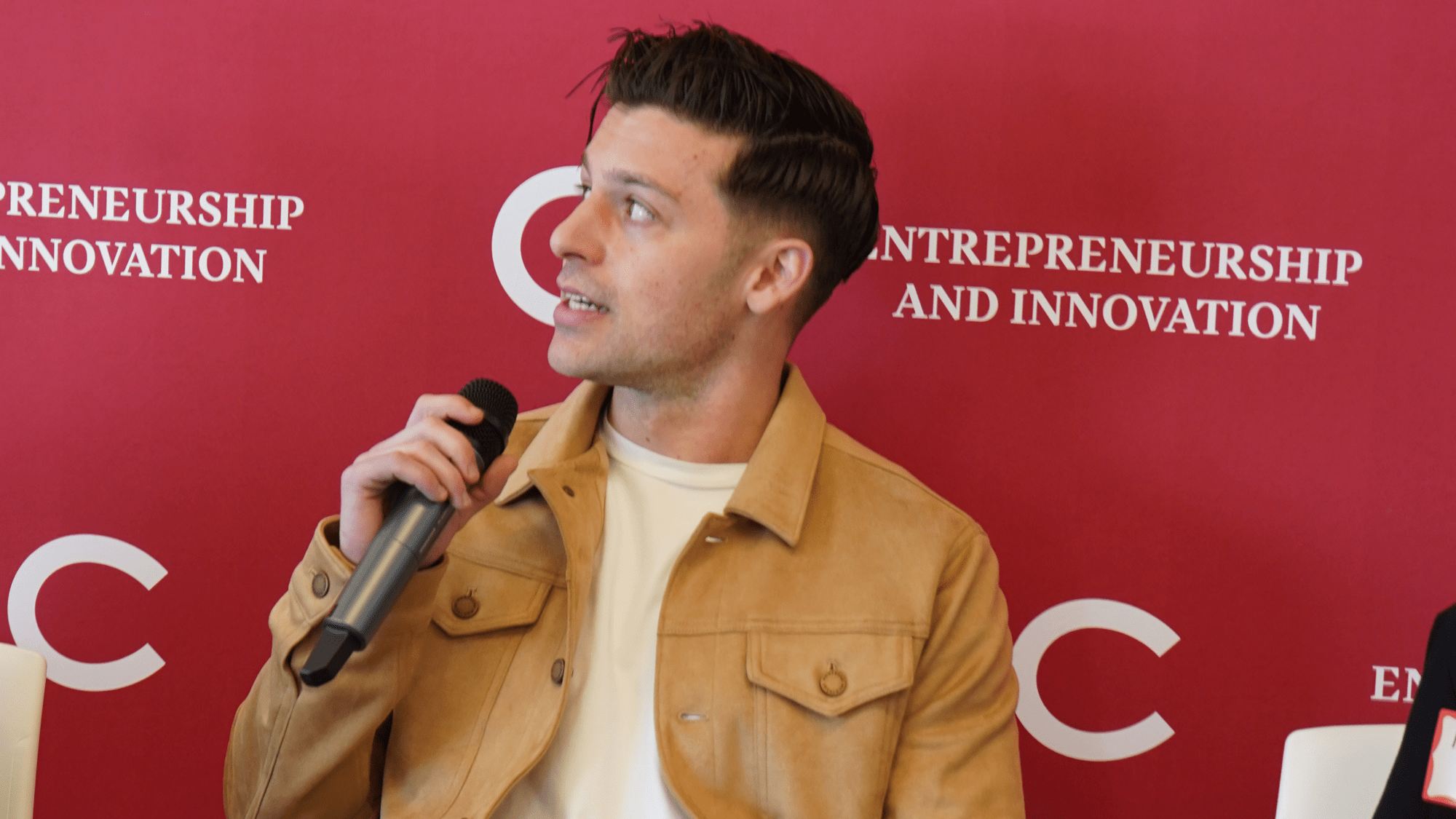
Nick Freud is the Co-Founder and COO of Fellow Humans, a co-learning platform designed to connect people navigating life transitions, including breakups, job loss, new diagnoses, and new parenthood, with real humans who have already been there. Before founding Fellow Humans, Nick spent eight years as co-founder of CampusReel, an education technology company focused on student-first virtual campus tours. For that work, he was named to the Forbes 30 Under 30 list in Education and featured in the New York Times, Forbes, TechCrunch, and on Good Morning America.
After experiencing clinical depression at the end of 2024, Nick stepped away from education to dedicate himself to enabling authentic human connection globally through Fellow Humans. His work is driven by a conviction that the mental health crisis cannot be solved by clinical expertise alone and that lived wisdom, peer connection, and community-based support must be central to any solution that works at scale.