
In this episode of Hope Illuminated, I'm joined by Alicia Scovill, Air Force veteran and founder of Scovill Consulting, whose work sits at the intersection of veteran well-being, construction industry culture, and suicide prevention. Alicia brings something rare to this conversation: not just lived experience of military service and transition, but years of intentional research into the veterans who are most at risk, and most often overlooked.
The episode opens with a framing I find both urgent and underappreciated: veterans are dying by suicide at higher rates than the general population, and the ones who surprise us most are not the ones carrying visible wounds of war. They are the invisible veterans, those who served without combat deployment, without visible injury, without a story that matches the Hollywood version of military service, and who carry a quiet, corrosive belief that their struggle is not legitimate because their sacrifice was not dramatic enough.
Alicia unpacks three root causes she has identified through her research and her community: veteran imposter syndrome, the belief that one's service was not significant enough to warrant recognition or support; unfulfilled mission, the grief that emerges when a veteran has lost a friend or colleague to suicide and carries a painful sense of personal responsibility; and failure to adapt, the underacknowledged brutality of learning to operate in a civilian world that makes no sense after years of structured, mission-driven military life. The paradox of choice, the absence of hierarchy, the relentless smallness of daily civilian decisions after years of high-stakes clarity: all of it can be profoundly disorienting.
The conversation turns to the construction industry, where veterans are heavily represented and where the cultural overlap with military values, toughness, mission, hierarchy, and loyalty, makes it both a natural fit and a particular risk environment. Alicia offers specific, practical guidance on how to engage veterans with authentic gratitude and curiosity: what questions open doors, what questions close them, and why a brief but meaningful acknowledgment of the oath itself, not just the service, can change how an invisible veteran experiences their own worth.
why this episode matters
The conversation about veteran suicide has focused heavily on combat trauma, PTSD, and visible wounds of war. That focus has saved lives. But it has also left a significant population of veterans without language, community, or support: the ones who served honorably, transitioned quietly, and are now struggling in silence because no one in their world knows to ask, and they do not believe they have the right to answer.
Alicia Scovill's framework gives that population a name, the invisible veteran, and gives the rest of us a map. For my audience of workplace mental health leaders, HR professionals, construction industry safety directors, and mental health counselors, this episode delivers something immediately deployable: a set of questions to ask, a set of responses to avoid, and a philosophy of authentic gratitude and curiosity that costs nothing and can change everything.
The construction industry context also matters enormously here. With a significant veteran workforce and a culture that rewards toughness over vulnerability, construction is one of the highest-leverage environments for this kind of targeted, culturally relevant outreach. Alicia's work connects directly to the broader effort to make suicide prevention a health and safety priority in industries where workers' lives depend on it every day, on the job site and off it.
Questions This Episode Answers
Why do veterans have higher suicide rates than the general population?
What is the invisible veteran?
What is veteran imposter syndrome?
What should I say to a veteran beyond "thank you for your service"?
How can employers better support veteran employees?
Key Themes & Insights
The Invisible Veteran
More veterans die by suicide who never deployed to combat than those who did. The veterans most at risk are often those who feel their service was not significant enough to warrant struggle, support, or recognition. Invisibility is not just a social experience. It is a survival risk.
Veteran Imposter Syndrome
Veterans who served stateside, who never deployed, who served in support roles, or who left early often carry deep shame about the legitimacy of their service. Alicia unpacks how this silences help-seeking and disconnects veterans from communities and resources that could save their lives.
Unfulfilled Mission
Veterans who have lost friends or fellow service members to suicide carry a particular grief: the painful sense that they failed to fulfill the mission of keeping that person alive. Alicia identifies this as a distinct and underrecognized driver of veteran suicidal crisis.
Beyond "Thank You for Your Service"
A fly-by acknowledgment, while well-intentioned, can actually reinforce imposter syndrome in veterans who do not believe their service warrants it. Alicia offers a powerful reframe: qualify the gratitude. "Anyone who took that oath is a hero to me" changes the interaction entirely.
Failure to Adapt
Returning to civilian life is not a return to something familiar. It is entry into a foreign world without a map. The paradox of choice, the loss of hierarchy and mission clarity, and the absence of camaraderie create a disorientation that looks like weakness but is actually a failure of support systems.
ABOUT ALICIA SCOVILL
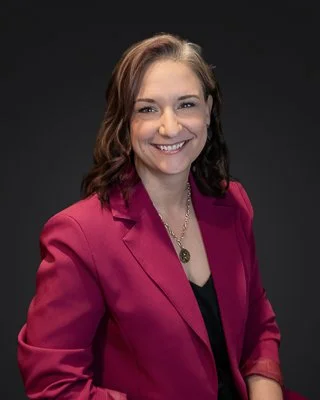
Alicia Scovill is the President of Scovill Construction & Contracting Services and a workforce systems strategist exploring the connection between organizational environments and human wellbeing. After years of personally navigating suicidal despair while working inside high-pressure industries, Alicia began recognizing recurring patterns across multiple organizations: environments that kept people performing while quietly eroding hope, connection, and psychological capacity. What began as an effort to understand what was impacting veterans in the workplace became something much bigger…a framework for helping leaders see how systems shape exhaustion, despair, disconnection, and nervous system overload, and how better environments help people stay well while they perform.