

I have seen gambling addiction up close in my own family, and I know how hidden, how isolating, and how dangerous it can become. That is exactly why I was so grateful when our mutual friend Cal Beyer introduced me to Saul Malek. Saul is a nationally recognized gambling-harm prevention speaker and a young man in long-term recovery - more than five years abstinent from gambling - who now devotes his full-time professional life to educating young people, schools, behavioral health organizations, and communities about what gambling addiction actually looks like from the inside.
What Saul has lived through is not a story about bad luck or poor impulse control. It is a story about a kind of addiction that hides beautifully behind sports fandom, financial ambition, intelligence, and an outwardly normal college life. It is a story about how secrecy and shame can spiral into suicidal despair. And it is a story about how recovery becomes possible when the truth finally has somewhere safe to land.
In this episode, we go through his full journey - from fantasy baseball at age 11, to sports betting in college, to the escalation that consumed his finances, his relationships, and nearly his life. We talk about what the science is now telling us about gambling and suicide risk, about the explosion of online sports betting, and about what recovery actually requires beyond just "stopping." We talk about Gamblers Anonymous, about the families who are harmed alongside the person gambling, and about what clinicians, pediatricians, schools, and communities can do differently starting now.
Gambling has been called the next opioid epidemic in America. After this conversation, I think you will understand why - and what we can do about it.
why this episode matters
Gambling addiction has been called the next opioid epidemic in America. I do not think that is hyperbole. What the opioid crisis and the gambling crisis share is that both were accelerated by industry decisions that prioritized profit over public health, both prey disproportionately on people who are already vulnerable, and both can quietly reach life-threatening severity before anyone around the person realizes what is happening.
What makes gambling particularly insidious is how invisible it is. There are no needle marks. There is no smell. There is no slurred speech. There is a phone, and sports is on television, and everyone knows someone who bets on the game. The line between entertainment and crisis can be crossed and recrossed many times before anyone names it for what it is.
Saul Malek is naming it. He is doing it in schools and on stages and now on this podcast, and I am proud to amplify his voice. If you are a clinician, start asking about gambling. If you are a parent, know that the apps and fantasy games your kids are playing may be conditioning neural pathways that matter. If you are a person in the thick of it -- know that Saul was in that same darkness, and he found his way out, and there is help available right now by calling or texting 1-800-MY-RESET.
Questions This Episode Answers
What is the connection between gambling addiction and suicide risk?
What percentage of people with gambling problems experience suicidal thoughts?
How has the legalization of sports betting changed gambling addiction rates?
What should family members do if they think someone they love has a gambling problem?
How do I know if I have a gambling problem or if I am just a recreational gambler?
Key Themes & Insights
The Fantasy-to-Betting Pipeline -- How It Starts Innocently
Fantasy baseball at 11, daily fantasy in high school, a bookie sophomore year of college. Saul’s story dismantles the myth that gambling addiction begins at the casino. It begins at the $10 bet -- and often much earlier in the apps and games normalized as part of sports fandom. This is the prevention message schools and parents need to hear.Gambling and Suicide Risk -- The Science Is Starker Than Most People Know
31.6% suicidal ideation. 13.2% lifetime suicide attempt. A 107-study meta-analysis. The 2025 NICE guideline naming gambling-related harm as a dominant suicide risk factor -- with acute risk highest immediately after a gambling episode. Saul lived this: he asked his GA sponsor how to end his life. This is not a peripheral risk. It is central to the disorder.The Invisible Double Life -- Secrecy as the Engine of Harm
No needle marks. No smell. Just a phone and a game on TV. Gambling addiction hides beautifully behind sports fandom, financial ambition, and a normal-looking college life. Understanding how secrecy sustains the addiction -- and how compassionate truth-telling breaks it -- is the core clinical and relational insight of this episode.The Explosion of Legal Sports Betting -- A Public Health Crisis in Real Time
$4.9 billion to $121.1 billion in six years. 94% placed online. A 23% spike in help-seeking searches following legalization. Prediction markets on the horizon. The industry’s “bet responsibly” messaging is wildly inadequate relative to the product design and 24/7 access now in every pocket.What Recovery Actually Requires -- Beyond Just Stopping
Financial transparency, cue removal, genuine 12-step work (not just attendance), rebuilding trust through consistent visible action, and a community that holds you accountable. Saul is honest that compliance without surrender does not work. Recovery required him to build a life in which gambling no longer filled the needs it once met.
ABOUT SAUL MALEK
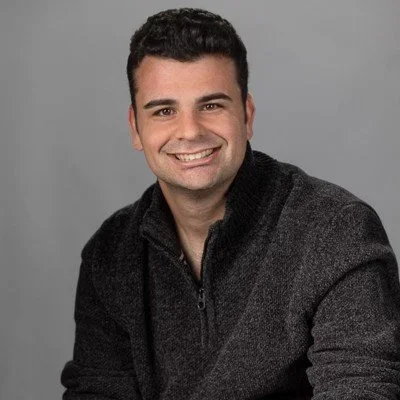
Saul Malek is a nationally recognized gambling-harm prevention speaker and a young man in long-term recovery from gambling addiction -- more than five years abstinent. What began for Saul as fantasy baseball in middle school evolved through daily fantasy sports and into a full-blown sports betting addiction during college that cost him money, relationships, and nearly his life. He has channeled that experience into a full-time speaking career dedicated to preventing gambling harm across schools (middle school through college), behavioral health organizations, fraternities, and any community that wants to better equip itself to recognize and respond to gambling addiction.
Saul's presentations combine lived experience with industry expertise and current research. He is a member of Gamblers Anonymous and speaks openly about the role of connection, accountability, and 12-step recovery in his own healing. He is also a previous guest on the Headspace for the Workplace podcast, where he addressed gambling harm in occupational settings.
SHOW NOTES
National Problem Gambling Helpline: Call or text 1-800-MY-RESET (1-800-697-3738) -- 24/7, free, confidential
988 Suicide and Crisis Lifeline: Call or text 988
Gam-Anon (support for families)