
I first heard about Mark Salzer from a cluster of colleagues I deeply trust. We were all at a conference in Vermont, and more than one person pulled me aside and said, "You have to go listen to him -- he's got it going on." They were absolutely right. I left that presentation with my mind buzzing, and I immediately thought: I have to bring him to Hope Illuminated.
Mark is a psychologist and professor at Temple University in Philadelphia. He comes from a family steeped in mental health -- his mother was a psychiatric nurse, his brother is a psychologist, and his grandfather was actually co-credited with coining the term "antidepressant." But what drives Mark is not legacy. It is social justice. He believes that people who experience significant mental health challenges are among the most disenfranchised, stigmatized, and discriminated against people in our society -- and that much of the mental health system, despite good intentions, perpetuates that problem.
In this episode, we dig into the concept of recovery and why Mark -- who calls himself a "recovery baby," shaped by the movement from its earliest days -- has grown concerned that the term has gone off the rails. We explore what the disability rights movement figured out long before mental health did: that inclusion, participation, and the opportunity to live a full life in community are not the rewards of getting better. They are the measure of getting better.
This is one of those conversations that will change how you think about your work -- whether you are a provider, a researcher, an advocate, or someone navigating your own mental health journey.
why this episode matters
The mental health field has spent decades asking, "Is this person getting better?" We measure symptom reduction, medication adherence, hospitalization rates. These matter. But Mark Salzer is asking a different question, and it is the one I think we have been missing: "Is this person getting their life back?"
Work. School. Friendship. Love. Faith. Parenting. Voting. Volunteering. A place where someone knows your name and where you are needed. These are not the rewards of recovery. They are recovery. And the research now supports what the disability rights movement has always known: people who participate in meaningful community life are physically healthier, cognitively sharper, and mentally stronger. Participation is a medical necessity.
For providers, this episode is a challenge to rethink what our treatment goals actually are. For researchers, it is an invitation to measure what actually matters. For advocates and people with lived experience, it is a validation of what they have always known: the goal is not to be less sick. The goal is to live a full life. And the world -- not just the individual -- has a responsibility to make that possible.
I met Mark in Vermont this year and immediately knew my listeners needed to hear from him. This episode is one I will be pointing people to for a long time.
Questions This Episode Answers
What is the difference between mental health recovery and community inclusion?
What is the social model of disability and how does it apply to mental health?
What is dignity of risk and why does it matter for people with psychiatric disabilities?
What can mental health providers learn from the disability rights movement?
How should mental health treatment goals be reframed around participation and quality of life?
Key Themes & Insights
Recovery Is Real, But It Has Gone Off the Rails
Mark has spent his career shaped by the concept of recovery, tracing it back to Pat Deegan's groundbreaking 1988 article, arguably the first time recovery was articulated as a meaningful concept in mental health. But he has grown frustrated. Recovery now has dozens of competing definitions, dozens of measurement tools, and every agency, state, and country seems to have their own version. Rather than converging, the field is diverging. Mark's concern is not with recovery as a lived experience -- that is real, and he honors it -- but with recovery as an organizing framework for systems and policy. When a word means everything, it risks meaning nothing.
The Better Question: Are You Doing the Things You Want to Do?
Mark and his colleagues at Temple University developed the Temple University Community Participation Measure, a free, non-proprietary tool that asks people a deceptively simple set of questions: How many days in the last 30 days did you work, take a class, attend a place of worship, spend time with friends? Is this important to you? Are you doing it as much as you would like? This question -- "Are you doing the things you want to do, as much as you want to do them?" -- is one of the most powerful reframes I have encountered in all my years working in mental health. It shifts the conversation from symptom management to life quality, from compliance to meaning.
Community Inclusion vs. Community Integration -- There Is a Difference
Mark draws an important distinction that I had not fully appreciated before this conversation. Community integration, embedded in the Americans with Disabilities Act, is about accommodations: adjusting environments so people with disabilities can participate. Community inclusion goes further. Inclusion requires a society that is actively welcoming and embracing -- that says, "We want you here. You have something to contribute. You matter." Integration is structural. Inclusion is cultural. And mental health has not yet caught up to either standard that the broader disability community has been advocating for decades.
What the Disability Rights Movement Got Right -- and Mental Health Has Missed
Two lessons from the broader disability community stand out in this conversation. First, the assumption that every person -- regardless of the severity of their impairment -- has something meaningful to contribute and wants to contribute. Mark shares vivid examples: a person with significant physical limitations who built an audience offering video game commentary; a nonverbal individual with intellectual disabilities who found joy and income shredding documents. These are not feel-good outliers. They reflect an entire orientation that participation is possible, expected, and good for people. Second: the social model of disability, which challenges the mental health field's deeply ingrained "individual model" -- the belief that disability lives inside the person and the solution is to fix the person.
The Social Model of Disability -- The Reframe Mental Health Needs
The individual model says: Mark has schizophrenia. His schizophrenia is what makes him disabled. Fix Mark. The social model says: Disability is a result of a poor person-environment fit. Mark's uniqueness and capabilities are not being welcomed and embraced by the work environment, the school environment, the dating environment, the faith community. The barriers are often external -- poverty, lack of transportation, stigma, discrimination -- not internal deficits. Mark's research suggests that roughly a third of the reason people with significant mental health challenges are not working is stigma, prejudice, and discrimination. Not symptoms. The system. This is a profound challenge to how we think, talk about, and support people in the mental health world.
ABOUT DR. MARK SALZER
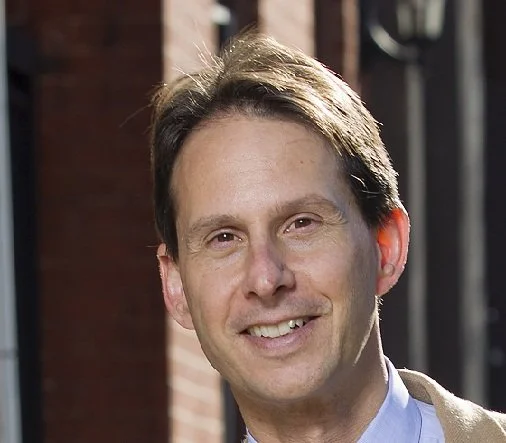
Mark Salzer, Ph.D. is a psychologist and Professor of Social and Behavioral Sciences in the College of Public Health at Temple University. He is also the Director of a federally-funded research and training center on independent living and participation of adults with psychiatric disabilities (www.tucollaborative.org).
Dr. Salzer and his colleagues conduct research that raise awareness about the importance of participation, such as work, going to school, leisure, faith, volunteering, and time with family and friends, as critical to health. They also test the effectiveness of interventions aimed at enhancing participation. He actively partners with people with lived experience of mental health challenges, their family members, providers, and policymakers.
SHOW NOTES
Temple University Collaborative on Community Inclusion
Email: mark.salzer@temple.edu
Relevant article(s) and resources
Salzer, M.S. & Baron, R.C. (2016). Well Together – A blueprint for community inclusion: fundamental concepts, theoretical frameworks and evidence. Published by Wellways Australia Limited, Melbourne, Australia. Available at https://tucollaborative.org/inclusion-foundations/well-together-a-blueprint-for-community-inclusion-fundamental-concepts-theoretical-frameworks-and-evidence/
Salzer, M.S. & Burns-Lynch, B. (2016). Peer Facilitated Community Inclusion Toolkit. Philadelphia, PA: Temple University Collaborative on Community Inclusion for Individuals with Psychiatric Disabilities. Available at http://www.tucollaborative.org/wp-content/uploads/Peer-facilitated-community-inclusion-ACCESSIBLE.pdf
Salzer, M.S. (2024). Building On Recovery: Embracing Community Inclusion in Mental Health Policies and Services. Community Mental Health Journal, 60, 1571-1578. https://doi.org/10.1007/s10597-024-01309-z.
Salzer, M.S. (2021). Community Inclusion and Social Determinants: From Opportunity to Health. Psychiatric Services, 72(7), 836-839. doi.org/10.1176/appi.ps.202000394
Snethen, G., Thomas, E., Jeffries, V., & Salzer, M.S. (2021). Welcoming places: Perspectives of individuals with mental illnesses. American Journal of Orthopsychiatry, 91(1), 76–85. https://doi.org/10.1037/ort0000519.