
There is something we do not say out loud nearly enough in the mental health field: we ask clinicians to sit beside trauma, addiction, suicide, and despair and then train them as though they should be unaffected by it. We tell ourselves we have it together. We have the knowledge, the frameworks, the coping strategies. It is, as I have come to see it, a big fat lie we tell ourselves as a field and one that has real consequences for the people we serve.
Sarah Buino has built her career around naming this openly. She grew up in an alcoholic family system, experienced chronic suicidal ideation from a young age, and entered the mental health field -- as so many of us do -- partly to understand her own story. She went on to become a licensed clinical social worker, built and sold a successful group practice, won recognition for her writing on the wounded healer concept, hosts the podcast Conversations with a Wounded Healer, and is now writing a book on the topic for NASW Press.
In this episode, Sarah and I go into the real conversation -- the one the training programs are not having. What does it mean to be a wounded healer versus an impaired professional? What happens when a clinician hits a personal crisis mid-career and has nowhere safe to turn? Why do we keep applying individual solutions to what are fundamentally systemic problems? And what would it look like if graduate programs treated clinicians' own healing work as foundational to the training -- not optional, not shameful, but expected?
Sarah's mic drop moment at the end of this episode is one I have been thinking about ever since: "If you feel a barrier to doing your own work, that is a signal to do the work." If you work in mental health, counseling, social work, psychology, or any helping profession, this episode is for you.
why this episode matters
The mental health workforce is in crisis. Burnout rates were already alarming before COVID. The pandemic did not create a temporary disruption -- it revealed and accelerated a structural failure in how we train, support, and sustain the people we ask to hold everyone else's pain.
What Sarah Buino is naming -- and what I have been living and working alongside for my entire career -- is that we cannot build a sustainable mental health system on a foundation of clinicians who are too ashamed to acknowledge their own struggles, too afraid of professional consequences to ask for help, and too burned out to be fully present for the people they are trying to serve.
The wounded healer framework is not a workaround or a consolation prize. It is a more honest, more effective, and more ethical model for the entire profession. Healing is not evidence of unfitness. It is the work. And the sooner our training programs, licensing boards, supervision structures, and professional organizations build that understanding into their DNA, the better the outcomes will be -- for clinicians and for everyone who comes to them for help.
Sarah Buino is one of the clearest, most courageous voices in this conversation. I am grateful she brought it to Hope Illuminated.
Questions This Episode Answers
What is a wounded healer in psychology and where does the concept come from?
What percentage of therapists and mental health professionals experience burnout?
Should therapists be required to go to therapy themselves during graduate training?
What should a therapist do when they are experiencing a mental health crisis?
What is the difference between a wounded healer and an impaired professional?
Key Themes & Insights
Wounded Healer vs. Impaired Professional -- A Critical Distinction
The term "wounded healer" traces back to the myth of Chiron -- the centaur who was a gifted healer and teacher carrying a wound that could never fully heal -- and to Jung's insight that the physician's own wounds are part of what makes the healing possible. Sarah has made this concept central to her life's work. The distinction she draws is essential: a wounded healer is someone who has done, and continues to do, their own healing work alongside the work they do for others. An impaired professional is someone whose wounds are running the show without awareness or accountability. One of these is an asset to the people they serve. The other is a liability. The field has confused the two for too long.
Why We Come Into This Field -- and What That Means for Training
Sarah's view -- and I share it -- is that most people who enter the helping professions do so because of their own earlier wounds, whether they are fully conscious of that or not. The grad school genogram exercise that cracked Sarah open. The statistics class that turned into my own aha moment. The suicidal ideation that was finally named and worked with rather than buried. If training programs acknowledged this reality rather than pretending clinical knowledge is value-neutral, the culture of the field would shift fundamentally. Sarah makes a compelling case for requiring or strongly incentivizing personal therapy during graduate training -- not as evidence of unfitness, but as foundational preparation for the work.
The Burnout Data -- and Why Individual Solutions Are Not Enough
A systematic review of pre-COVID data found that 40% of mental health professionals experience high levels of emotional exhaustion, 22% experience depersonalization, and 19% report low personal accomplishment. Those numbers reflect a system-level crisis being met with individual-level interventions -- yoga, box breathing, self-care tips -- that cannot address what is fundamentally wrong with how the field is organized and resourced. Sarah is writing her NASW Press book on exactly this gap. When I mentioned the concept of psychosocial hazards -- the structural conditions at work that create harm regardless of individual coping -- Sarah immediately connected it to her emerging concept of "systemic burnout." We cannot patch a broken system with bubble baths.
When the Clinician Is in Crisis -- and There Is Nowhere Safe to Go
One of the most striking parts of this conversation is a story Sarah shares -- with permission -- about a colleague who developed an emotional (non-physical) boundary violation with a client and wanted help, but had nowhere to turn without risking immediate license loss. This is the trap the field has built for itself: the stakes of disclosure are so high that clinicians in distress stay silent, which means the distress deepens and the clients ultimately suffer more. Sarah's argument -- and mine -- is that the field needs pathways for clinicians to seek help that are low-barrier, confidential, and genuinely supportive rather than immediately punitive. Supervision for life, not just for licensure.
Suicidal Ideation as a Signal -- Reframing the Check Engine Light
Sarah shares openly that she has experienced suicidal ideation multiple times as an adult clinician. What she has learned to do with that is something I think every mental health professional needs to hear: she now treats it as a check engine light, a signal that she has backed herself into a corner and that something significant needs to change. That reframe -- from suicidal ideation as crisis to suicidal ideation as information -- does not minimize the urgency. It redirects the response from panic and shame into action. The first time it happened, she went to Onsite for a six-day experiential retreat. During COVID, she sought residential treatment -- and was clear-eyed and decisive about doing so, even when insurance would not cover it.
about SARAH BUINO
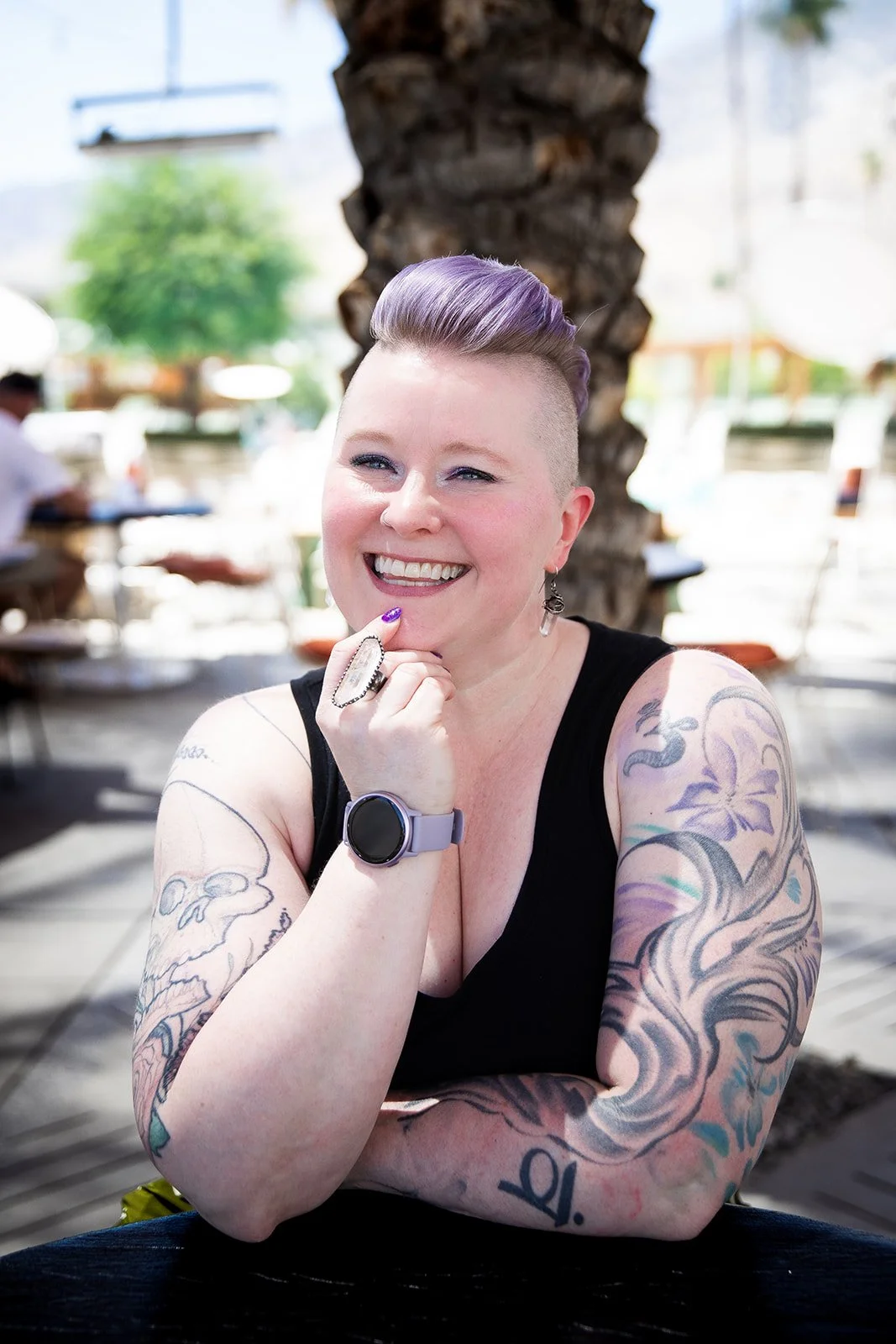
Sarah Buino is a psychotherapist, former group practice owner, and expert in wounded healer dynamics, leadership development, and the intersection of personal healing and systems-level thinking. Her work helps therapists and group practice leaders understand how trauma, power, culture, and organizational structure interact, and how to build the relational and psychological capacity needed to lead ethically in a rapidly changing mental health landscape.
Sarah is the host of Conversations With a Wounded Healer podcast about the journey of healing on an individual and collective level. She writes and speaks extensively on the themes of emotional labor, wounded healer dynamics, and the importance of leaders doing their own healing work. Her mic-drop philosophy: the biggest gift we can give ourselves, our children, our employees, and our fellow humans is to bravely do our own healing.
Fun fact: Sarah drives a purple Ford Bronco Sport, and considers herself a unicorn.