

In this episode of Headspace for the Workplace, I sit down with Sarah Buino, a psychotherapist, former group practice owner, and nationally recognized voice on wounded healer dynamics in the helping professions. Peer support is one of the most powerful tools available to any organization trying to build psychological safety at scale: it is accessible, human, and uniquely effective at reaching people who would never walk into a therapist's office. But peer support programs have a lifecycle that most organizations do not plan for, and when they fail, it is almost always the most compassionate, most committed helpers who absorb the damage.
The episode opens with a pattern I have seen repeatedly across employers, unions, and professional associations: the honeymoon phase. People volunteer to be peer supporters, bring lived experience and genuine care, make meaningful connections, and for a while everything works beautifully. Then, somewhere between six and twelve months in, the emotional labor accumulates. Helpers who came in wanting to serve begin to carry things that are not theirs to carry. Without clear role definition, triage systems, boundary-setting guidance, and structured support of their own, the most dedicated peer supporters are also the most vulnerable to burnout, secondary trauma, and eventually exit from the program.
Sarah and I cover the two structural guardrails every program needs before launch: defining the role with precision before a crisis forces the issue, and building support infrastructure for the supporters themselves from day one. The episode is short, practical, and directly applicable to any organization at any stage of peer support program development, whether they are considering a program, in the honeymoon phase, or managing the aftermath of a program that burned out its volunteers.
Why This Matters in the Workplace
Peer Support Is Not a Free Resource
The appeal of peer support programs is real and well-documented: they extend mental health reach to people who would not seek formal care, they leverage lived experience as a form of credibility that no credential can replicate, and they build community. But they are not free. The cost is emotional, and it is paid by the helpers. When organizations stand up peer support programs without role clarity, triage systems, supervision, or structured support for the supporters, they are making a quiet extraction from their most caring employees. The debt compounds over time and is paid in burnout, secondary trauma, and program collapse.
The Wounded Healer Dynamic Is Everywhere
• People who volunteer for peer support roles often do so because they have personal experience with the issues they are trying to help others navigate: recovery, loss, mental health crises, workplace injury
• That lived experience is the whole point, and it is genuinely powerful. But it also means peer supporters may bring unresolved material into the helping relationship without knowing it
• The internal pressure to fix, save, and solve is not just a systems problem. It is often a personal one, rooted in the helper's own relationship with helplessness and control
• Peer supporters who are also in recovery or early in their own healing journey are particularly vulnerable to role confusion between their personal story and their helping role
• Without supervision and structured reflection, helpers do not know when they have crossed from support into therapy territory, and they cannot protect the boundary they cannot see
Construction Industry Note
I work extensively in the construction industry, and the peer support dynamic there has a specific texture worth naming. Construction workers are tactical, problem-solving people. They are extraordinarily good at identifying a problem and fixing it fast. When they step into peer support roles and discover that emotional problems do not respond to the same strategies, the frustration is real and predictable: they give advice, the person does not take it, and the peer supporter concludes the person is a lost cause. That is not a failure of the person seeking support. It is a gap in the peer supporter's training. Role clarity and supervisor support can close it.
In this episode, we’ll answer:
How do you prevent peer supporter burnout in workplace mental health programs?
What is the difference between peer support and therapy in the workplace?
What should a peer support triage decision tree include?
What is emotional labor in peer support and how do organizations address it?
How do you set up external supervision for a workplace peer support program?
Two Tactical Takeaways from This Episode
Tactical Takeaway #1: Define the Role Before the Crisis
Sarah's first takeaway is the architectural principle of peer support program design: you cannot build the guardrails after the vehicle has already gone off the road. The role of a peer supporter must be defined, documented, and practiced before anyone steps into it, and especially before a 6pm Friday crisis lands in someone's lap who has no idea what they are supposed to do.
Role definition includes at minimum: a clear articulation of what peer support is (being a caring, present, non-fixing presence) and what it is not (therapy, crisis counseling, diagnosis, advice-giving); a triage decision tree that helps supporters quickly assess whether a situation is within their scope or requires escalation to the EAP, a licensed professional, or 988; explicit boundary guidance including time limits, after-hours expectations, and permission to say this is beyond my capacity right now; and training that includes scenario role-play so supporters have practiced the situations before they encounter them live.
WHY IT WORKS
Clarity is protective. When peer supporters know exactly where their role ends and the clinical professional's role begins, they stop carrying the weight of decisions they were never qualified to make. They also stop feeling like failures when they cannot solve something unsolvable. The construction parallel is instructive: a skilled ironworker knows which problems need a welder and which need a structural engineer. That clarity does not diminish their contribution. It defines it. The same is true for peer supporters.
Tactical Takeaway #2: Support the Supporters
Sarah's second takeaway closes the gap that most peer support programs leave open: they invest in training the helpers but not in sustaining them. The emotional labor of peer support is real, it accumulates, and it does not resolve itself without intentional structural support. Organizations that do not build support for their supporters into the program architecture from the beginning are running a countdown clock on their most compassionate volunteers.
The practical structure Sarah and I both recommend is external supervision: a contracted mental health professional whose only role is to support the peer supporters themselves. This is not a luxury. It is the oxygen mask. The supervisor provides a confidentiality-protected space where peer supporters can process what they are carrying, receive continuing education on relevant topics (addiction one month, anxiety the next, traumatic stress the following), consult on situations that felt beyond their scope, and experience themselves as a community rather than isolated helpers. The frequency can flex with program volume: monthly check-ins when caseload is light, more often when it is heavy. What matters is that it is structural, scheduled, and non-negotiable.
WHY IT WORKS
When helpers know they have a place to bring the weight, they carry it differently. They are less likely to bring it home, less likely to over-extend into therapy territory, and more likely to stay in the role long-term. The group format also creates something that individual supervision cannot: normalization. Hearing another peer supporter say I had a call last week that I could not stop thinking about is more relieving than any clinical instruction. It communicates that this is hard for everyone, that the accumulation is real, and that the program sees them as people who also need care, not just providers of it.
about SARAH BUINO
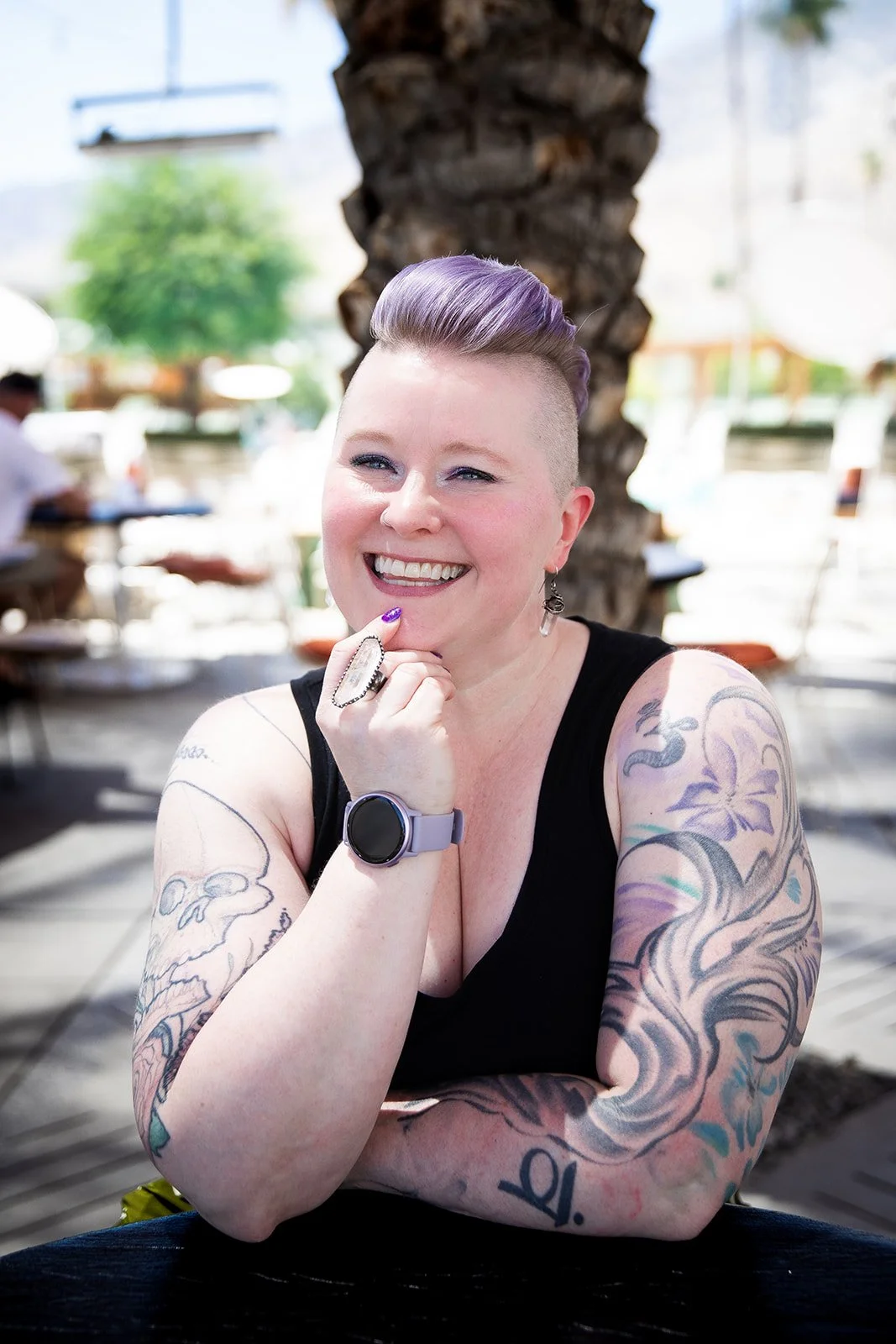
Sarah Buino is a psychotherapist, former group practice owner, and expert in wounded healer dynamics, leadership development, and the intersection of personal healing and systems-level thinking. Her work helps therapists and group practice leaders understand how trauma, power, culture, and organizational structure interact, and how to build the relational and psychological capacity needed to lead ethically in a rapidly changing mental health landscape.
Sarah is the host of the Head, Heart, and Biz podcast, which reaches therapists and mental health leaders on the business and personal dimensions of building a sustainable practice. She writes and speaks extensively on the themes of emotional labor, wounded healer dynamics, and the importance of leaders doing their own healing work. Her mic-drop philosophy: the biggest gift we can give ourselves, our children, our employees, and our fellow humans is to bravely do our own healing.
Fun fact: Sarah drives a Prince Purple Subaru Forester, and considers herself a unicorn.