

This special episode of Headspace for the Workplace is produced in partnership with the International Association for Suicide Prevention (IASP) Workplace Special Interest Group, co-chaired by Dr. Sally Spencer-Thomas and Jørgen Gullestrup. It is part of an ongoing series examining work-related suicide - cases where workplace factors contribute, in whole or in part, to a suicide death - a topic that remains critically underdiscussed in most of the world.
In this episode, Dr. Sally and Jørgen are joined by Liam O'Brien, Assistant Secretary of the Australian Council of Trade Unions (ACTU), one of the most advanced voices in the world on psychosocial workplace regulation. Australia has recently implemented groundbreaking legal reforms that require employers to identify and control psychosocial hazards and critically, to notify regulators when a suicide or suicide attempt may have been contributed to by workplace factors. These are not wellness programs. They are legally binding safety standards.
The conversation covers the architecture of Australia's regulatory framework, the ACTU's Mind Your Head campaign, the hierarchy of controls applied to mental health hazards, the employer education gap, and how the global suicide prevention and occupational health communities can partner to move this agenda forward. It is a fundamental challenge to the dominant narrative in most Western countries. Mental health at work is a personal responsibility and a compelling argument for treating psychological harm as a shared, collective, and legally enforceable workplace duty.
Why This Matters in the Workplace
The Framing Shift That Changes Everything
The dominant narrative in most countries, including the United States, frames workplace mental health as an individual issue. Someone is struggling; they need support; the employer is being generous by offering it. Australia has legally rejected that framing. Under their framework, psychological health is a safety obligation, not a benefit. Employers have a duty to identify and control psychosocial hazards the same way they manage fall risks and chemical exposures. The question is no longer "Are we being supportive?" It is "Are we compliant?"
The Numbers
• An estimated 10–15% of suicides in Australia are attributable to workplace factors
• Construction workers are approximately twice as likely to die by suicide as workers in other industries
• 1 in 5 workers in Australia report sustaining a mental health-related injury at work that could have been prevented
• Mental health compensation claims have risen 10–15% over the last decade — even as physical injury rates declined
• Australia now legally requires employers to notify regulators when a suicide or suicide attempt may have involved a work-related factor
• Workers in unionized environments with active psychosocial hazard campaigns are measurably more protected from mental ill health
What's At Stake Globally
Most countries, including the United States, have no binding standards for psychosocial hazards in the workplace. Mental health obligations exist in theory ("employers must protect health") but carry no minimum standards, no control requirements, and no enforcement architecture. Australia's framework represents what is possible when the occupational health and safety system is applied to psychological harm. The France Telecom case — where executives were criminally convicted for workplace conditions that contributed to a wave of employee suicides — demonstrates that accountability is achievable. The question is whether the rest of the world will wait another 70 years, as it did with asbestos, before acting.
Why Mental Health Professionals and Suicidologists Need to Engage
The suicide prevention sector has traditionally approached workplace mental health from an individual clinical lens: assessment, treatment, crisis intervention. This episode argues that suicidologists and mental health professionals must also engage the occupational health and safety system — because that is where the structural levers for prevention exist. Liam O'Brien's direct call to the global mental health community: reframe workplace mental health as a rights-based issue, build alliances with labor movements, and recognize that collective action is the most powerful prevention tool available.
In this episode, we’ll answer:
What is work-related suicide and how is it defined?
What are psychosocial hazards in the workplace?
What is the hierarchy of controls for psychosocial hazards?
What can mental health professionals do to address work-related suicide?
Why are construction workers at higher risk for work-related suicide?
Two Tactical Takeaways from the Episode
Tactical Takeaway #1: Apply the Hierarchy of Controls to Psychological Hazards
The single most powerful concept in this episode is the hierarchy of controls — the principle that the preferred approach to any hazard is elimination at the source, not personal protective equipment at the end. Liam O'Brien's core argument is that this principle, which transformed physical safety in workplaces globally, must be applied to psychosocial hazards.
In practice, this means: instead of asking workers to cope with excessive workloads, eliminate the excessive workload through job design. Instead of offering an EAP to workers dealing with occupational violence, increase staffing so violence is less likely to emerge. Instead of training workers to manage burnout, redesign rosters so burnout is structurally prevented. The solution is upstream — not downstream.
WHY IT WORKS
The hierarchy of controls approach is legally enforceable, scalable, and does not rely on individual worker disclosure or help-seeking — two of the biggest barriers to mental health support in high-stigma industries. It shifts the burden from the worker to the system, which is where the lever actually is. Organizations that design psychosocial safety in from the start see measurable reductions in mental health injuries and workers' compensation claims.
Tactical Takeaway #2: Educate Employers — Not Just Workers — About Their Obligations
Liam O'Brien's most counterintuitive insight — described as something he said over coffee with Jørgen that initially seemed strange but quickly made sense — is this: the biggest gap in the psychosocial safety system is not worker knowledge. It is employer knowledge. Workers and health and safety representatives often understand their rights better than the managers responsible for upholding them.
In Australia, health and safety representatives are legally required to complete five days of training annually — paid for by the employer — and a one-day annual refresher. There is no equivalent training requirement for employers. The result: workers show up knowing their rights, managers have no idea what their obligations are, and the system breaks down at the point of implementation. In countries like Australia, where industrial manslaughter legislation means managers can face criminal liability for failing to meet health and safety obligations, this gap is not just operationally problematic — it is legally dangerous.
WHY IT WORKS
Closing the employer knowledge gap is not a radical ask — it is a baseline requirement for any system of rights to function. Organizations that invest in training managers on their psychosocial safety obligations — not just their HR teams, but their frontline supervisors and senior leaders — create environments where workers can actually exercise the rights that exist on paper. The practical application: add psychosocial hazard obligations to manager onboarding, supervisory training, and leadership development curricula. Make it as standard as manual handling or fire safety.
About Jørgen Gullestrup
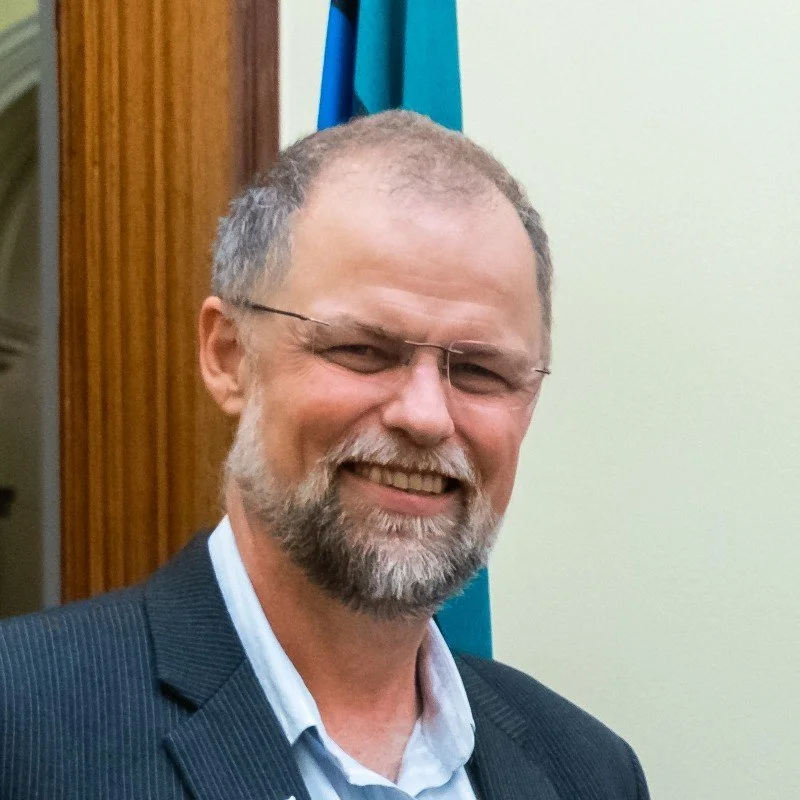
Jørgen Gullestrup is the founding CEO of MATES in Construction Australia, returning to the organization he founded in 2008 as of May 2025. A licensed plumber by trade, he began working in construction at age 15 and later served as a union delegate, official, and Secretary of the Plumbers Union for nearly seven years. Jørgen identifies as having lived experience of suicide, which continues to shape his authentic and compassionate leadership in this space. He holds a Master's degree in Suicidology and is currently a PhD candidate exploring help-offering among men in suicide prevention — seeking to uncover the "magic sauce" behind the MATES program. He also serves on the Queensland Mental Health and Drugs Council and co-chairs the International Association for Suicide Prevention's Workplace Special Interest Group. He is a LivingWorks ASIST and safeTALK trainer. Within the first five years of MATES' operation, an 8% reduction in Queensland construction industry suicide rates was achieved.
About Liam O’Brien
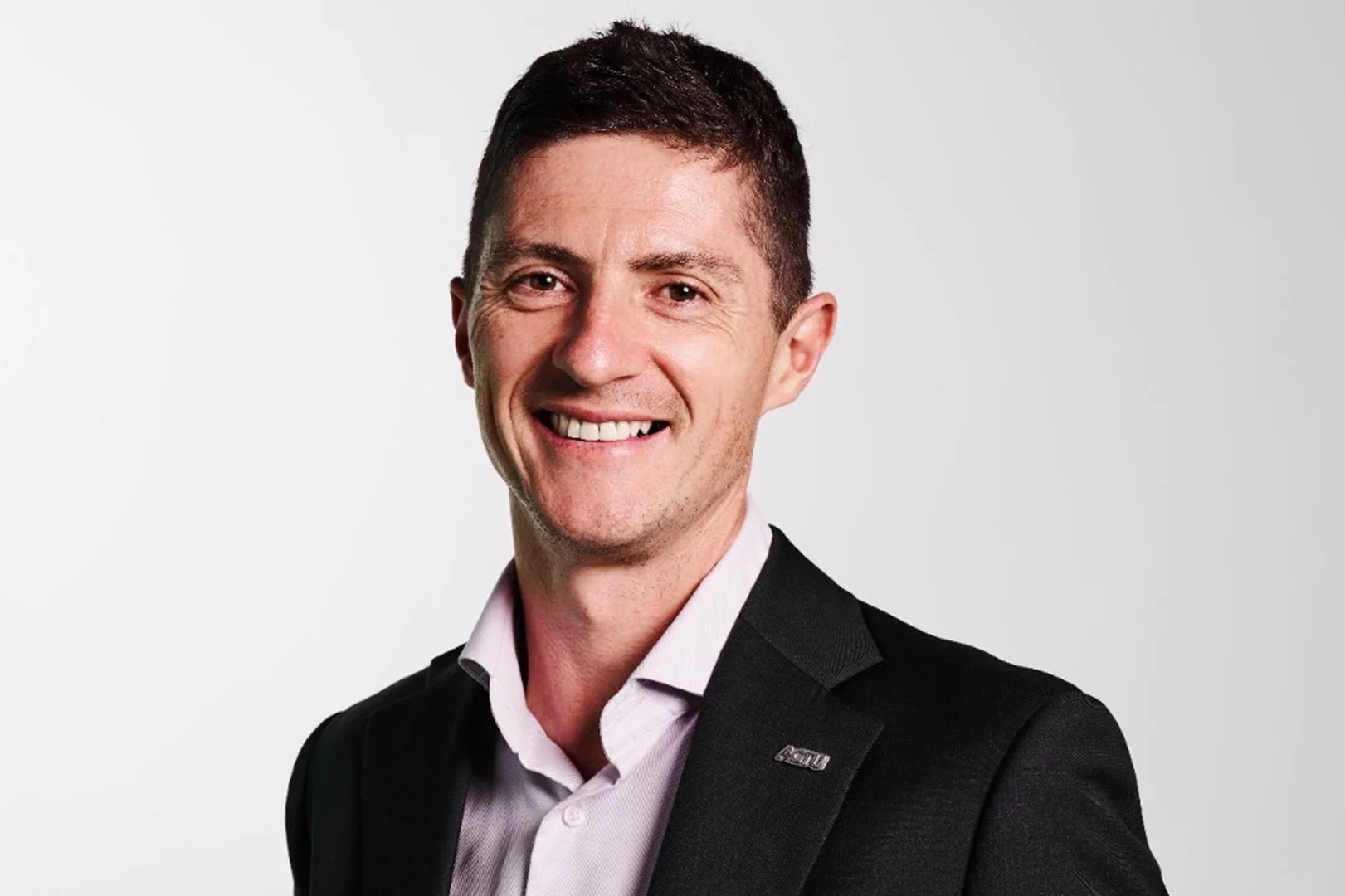
Liam was re-elected as Assistant Secretary at the ACTU Congress in June 2024. Before joining the ACTU, he was the Victorian Assistant Secretary and National Vice-President of the Australian Workers' Union (AWU), where he fought for workers across aluminum, aviation, glass, and construction sectors.
As ACTU Assistant Secretary, Liam leads the movement's policy, industrial, and campaigning work on work health and safety and workers' compensation matters. He is passionate about the rights of all workers to have safe, healthy, and decent work, and is a member of Safe Work Australia (SWA) and the Asbestos and Silica Safety and Eradication Council (ASSEC). He is also responsible for the skills and VET portfolio at the ACTU, and is the Deputy Chair of the Jobs and Skills Australia Ministerial Advisory Board. He holds a Bachelor of Arts and Bachelor of Politics, Philosophy and Economics.
Show Notes
International Association for Suicide Prevention (IASP): https://www.iasp.info
https://www.actu.org.au/officer/liam-obrien/
https://www.safeworkaustralia.gov.au/